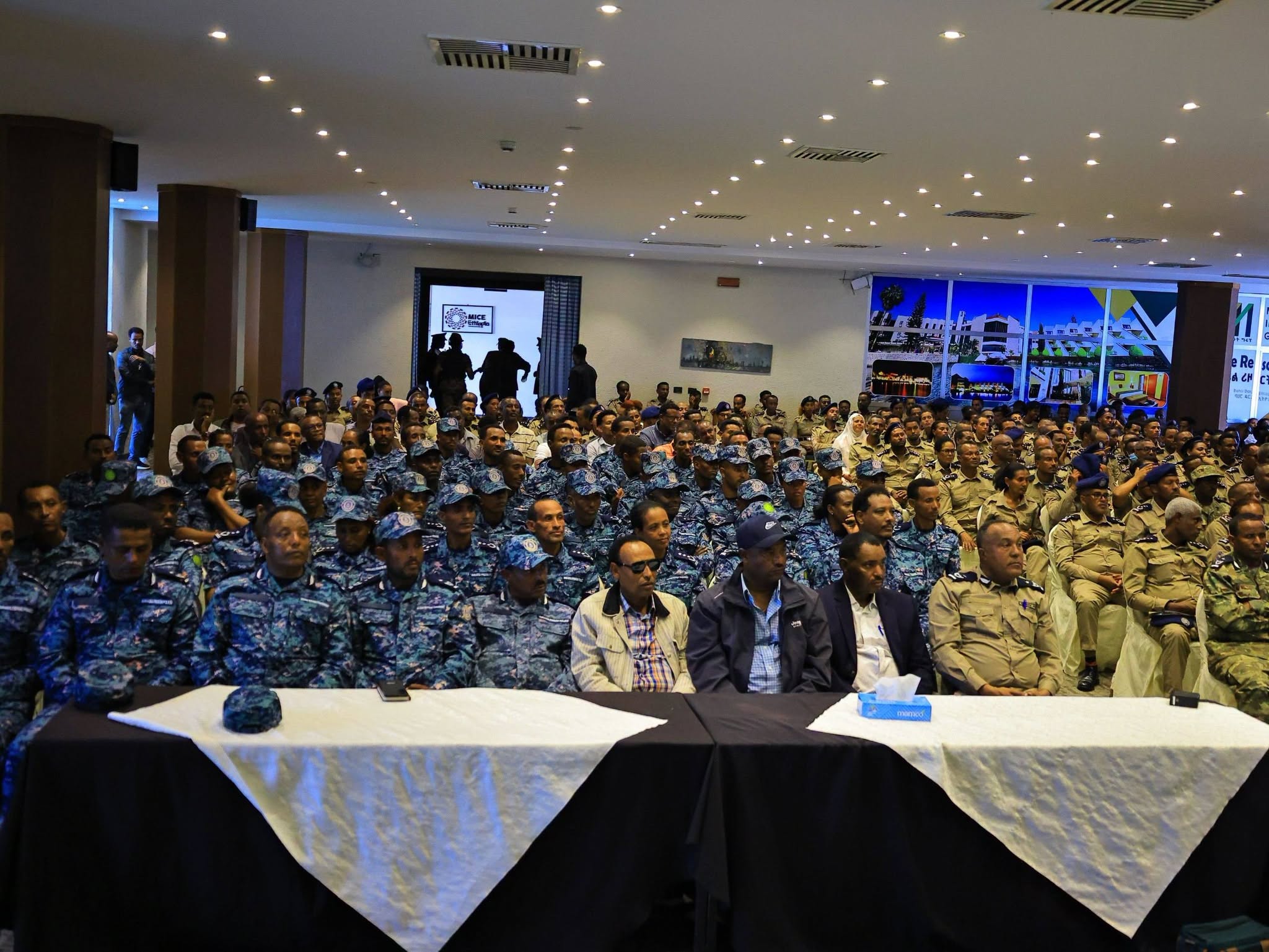
Addis Ababa (AMECO) – For the people of Ethiopia’s Amhara region, resilience forms an unyielding cornerstone of national identity, regional leadership declared as security institutions gathered to observe “Resilience Day” under the official motto A Firm Foundation for Revival.
The commemorative proceedings brought together representatives from the Amhara Region Peace and Security Bureau, the Militia Commission, the Prison Commission, and the Regional Police Headquarters.
Addressing the gathering, Dr Eshetu Yesuf, head of the Amhara Region Peace and Security Bureau, stated that subversive attempts aimed at fracturing the region, dividing its populace, and destabilising state structures had been successfully repelled through the steadfastness of the public and joint security forces.
Dr Yesuf highlighted that despite periods of acute instability, the region maintained key commitments, including hosting major international platforms such as the annual Tana High-Level Forum on Security in Africa.
He praised regional police forces and correctional services for undertaking internal structural reforms while restoring order, calling for continued collective efforts to counter remaining security threats and establish long-term stability.
Reflecting on the ethos of service, Lieutenant General Tigabu Yilma, commander of the Amhara Region Police Headquarters, stated that true resilience requires personal sacrifice—dedicating time, physical safety, and life itself to the public interest, state sovereignty, and constitutional order. Such sacrifice, General Yilma noted, holds value only when stripped of personal self-interest and bound to a higher national purpose.
General Tigabu reminded attendees that historical narratives are forged through human effort, emphasizing that current actions will form tomorrow’s historical record and urging every sector to contribute responsibly.
Dr Amanuel Ferede, regional administrative coordinator with the rank of vice president, affirmed that endurance remains an intrinsic element of Amhara heritage. He noted that local communities have repeatedly navigated complex crises by drawing on deep-seated cultural traditions and collective solidarity.
Framing “Resilience Day” as an opportunity to honor personnel who protected national sovereignty, Dr Amanuel reported that the security situation across the region has seen substantial improvement after enduring intense pressure from internal and external extremist forces.
He credited this positive shift to a unified framework combining federal and regional security organs with traditional civic institutions, including community elders, religious leaders, youth representatives, and scholars.
Looking ahead, Dr Amanuel emphasized that returning the region to lasting peace and development requires resolving grievances through inclusive dialogue and tolerance. By transforming past adversities into opportunities, he argued, citizens and leaders can jointly build a stable, prosperous Ethiopia anchored in the rule of law.