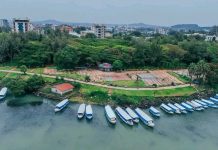

Addis Ababa (AMECO)- Bahir Dar is hosting a major fish festival celebrating the region’s rich aquatic resources, social cohesion, and legendary hospitality.
The event has been jointly organised by the Amhara Regional Bureau of Culture, Tourism and Sport alongside the regional Bureau of Livestock and Fishery Resources.
Dr Ayele Anawte, Deputy Head of the Culture and Tourism Bureau, highlighted that the festival extends well beyond promoting tourism. It aims to foster public understanding of fish as a critical asset for food security as well as physical and mental health, while showcasing Bahir Dar’s scenic charm.
Lake Tana hosts more than 37 islands, 20 of which shelter historic monasteries preserving Ethiopia’s deep history, sacred architecture, and artistic heritage, Dr Ayele noted. The surrounding ecosystem provides a habitat for over 455 bird species—55 of which are endemic to the region—and welcomes up to 100,000 migratory birds from across East Africa each year.
The lake is also home to more than 27 native fish species. Noting that this year’s festival coincided with the natural breeding season, Dr Ayele outlined an ambitious vision to scale up future editions. Going forward, the festival will be held annually every January, fully integrated into Bahir Dar’s broader calendar of cultural celebrations.
Gashaw Endale, Head of the Bahir Dar City Administration Bureau of Culture, Tourism and Sport, stated that municipal authorities are actively leveraging local water resources to position fish products as a key expression of regional identity and culinary tourism. At the main festival hub, culinary teams are showcasing six distinct preparation methods to visitors and tourists.
Abebe Fentahun, a fisheries specialist at the Amhara Regional Bureau of Livestock and Fishery Resources, emphasized that the region possesses vast untapped potential across its lakes, rivers, and artificial reservoirs, with Lake Tana standing as the primary driver of production. He noted that the festival serves as a vital platform to diversify domestic fish consumption, highlight dietary benefits, and galvanise stakeholder investment in the sector.
Highlighting the lake’s ecological wealth, culinary expert Cheif observed that despite fish being densely nutritious, it remains underutilised in daily diets. He urged a shift in consumer habits by scaling up production to lower market prices and modernising fishing techniques across the fleet—a strategy he noted would significantly enhance Bahir Dar’s standing as a world-class tourist destination