Addis Ababa (AMECO)– Ethiopia has entered its annual seven-week period of intense cultural and spiritual renewal, marking the transition from the heavy rains of winter (Kiremt) to the vibrant bloom of spring (Tseday).
Stretching from 13 Nehase to 21 Meskerem in the Ethiopian calendar, the seasonal cycle blends Orthodox Christian traditions with ancestral cultural rites, transforming countryside meadows and city squares across the country into hubs of music, ritual, and community gathering.
The festivities begin on 13 Nehase with Buhe (Debre Tabor), a holiday widely regarded as the first sign of breaking weather following weeks of torrential downpours and thick fog. According to local lore, the passage of Buhe signals the definitive end of winter. During the festival, young boys sing traditional Hoya Hoye songs and crack leather whips to simulate winter thunder, while mothers bake mulmul bread to share with neighbours. Families also light chibo (wooden torches) at dusk to reflect the divine light associated with Mount Tabor.
The momentum continues from 16 Nehase following the conclusion of the Filseta fast, giving way to the female-focused celebrations of Ashendye, Shadey, and Solell. Led by young women and girls adorned in elaborate braided hairstyles, traditional dresses, and woven grass waistbands (hamelmal), these multi-day street festivals showcase female expression, freedom, and solidarity through synchronized drumming and dance.
In the days leading up to the New Year, particularly in regions such as Gojjam, girls perform pre-dawn rituals in local meadows, picking engicha—a white-flowered wild grass—to present to mothers as tokens of health and transition into the new year. Households are simultaneously cleansed with aromatic kese herbs, replacing the damp scent of winter with fresh spring fragrances.
The transition culminates during the intercalary days of Pagume, when public ritual washings in rivers symbolise the cleansing of past burdens, leading directly into Enkutatash (New Year) on 1 Meskerem. As yellow Adey Abeba daisies blanket the landscape, young girls sing traditional New Year carols across local neighbourhoods.
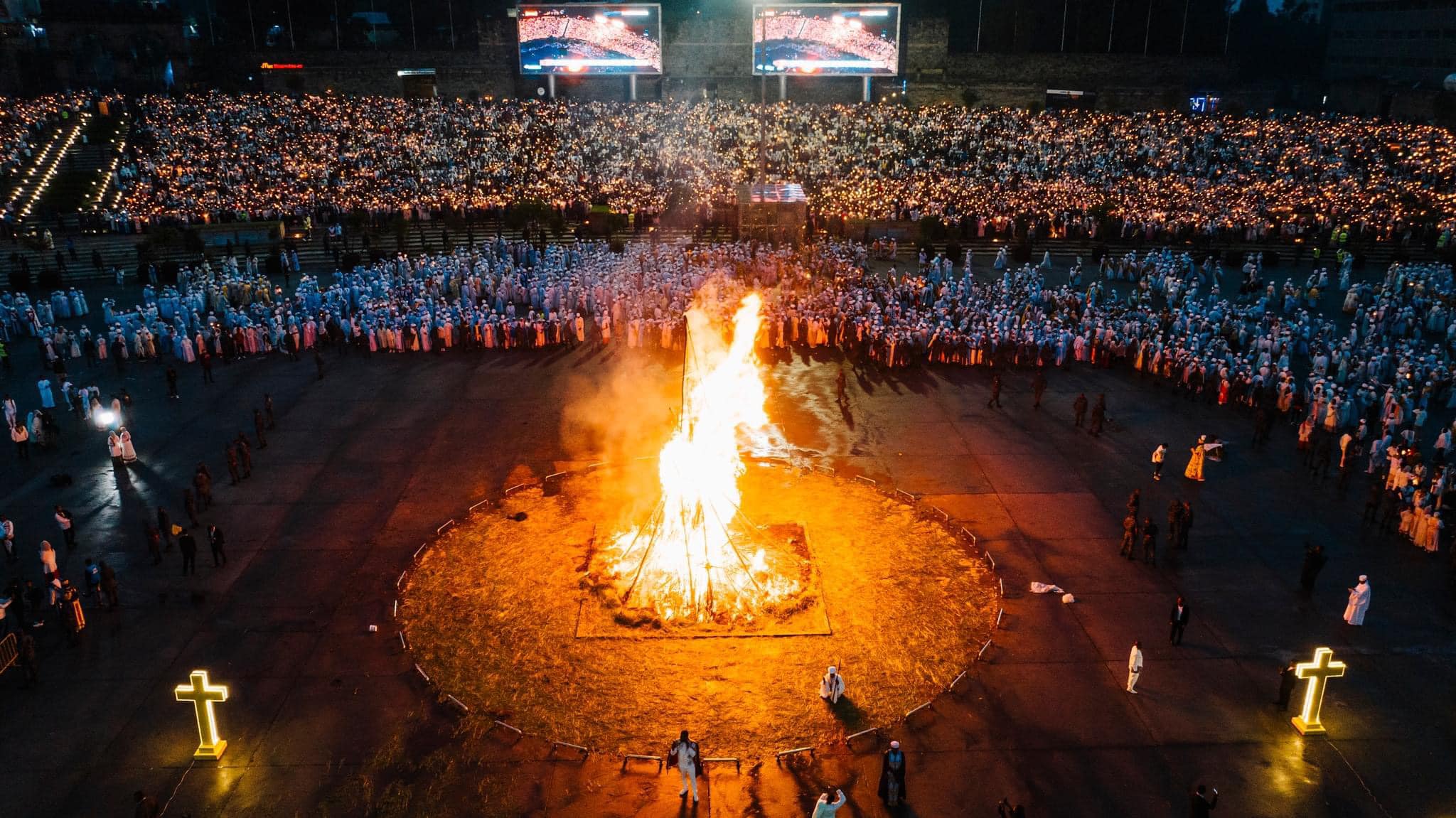
The seasonal cycle reaches its visual peak on 16 and 17 Meskerem with Meskel Demera, commemorating the discovery of the True Cross. Massive pyramid-shaped bonfires are set alight in city centers—most notably at Addis Ababa’s Meskel Square—where white-robed clergy and congregation members perform ancient Yaredic chants amidst rising smoke that symbolises the triumph of light and knowledge over darkness.
The seven-week cycle concludes on 21 Meskerem with a major pilgrimage to the mountain monastery of Gishen Debre Kerbe. Thousands of white-clad worshippers undertake the strenuous uphill trek, a physical journey intended to symbolise life’s hardships and the achievement of ultimate spiritual relief.