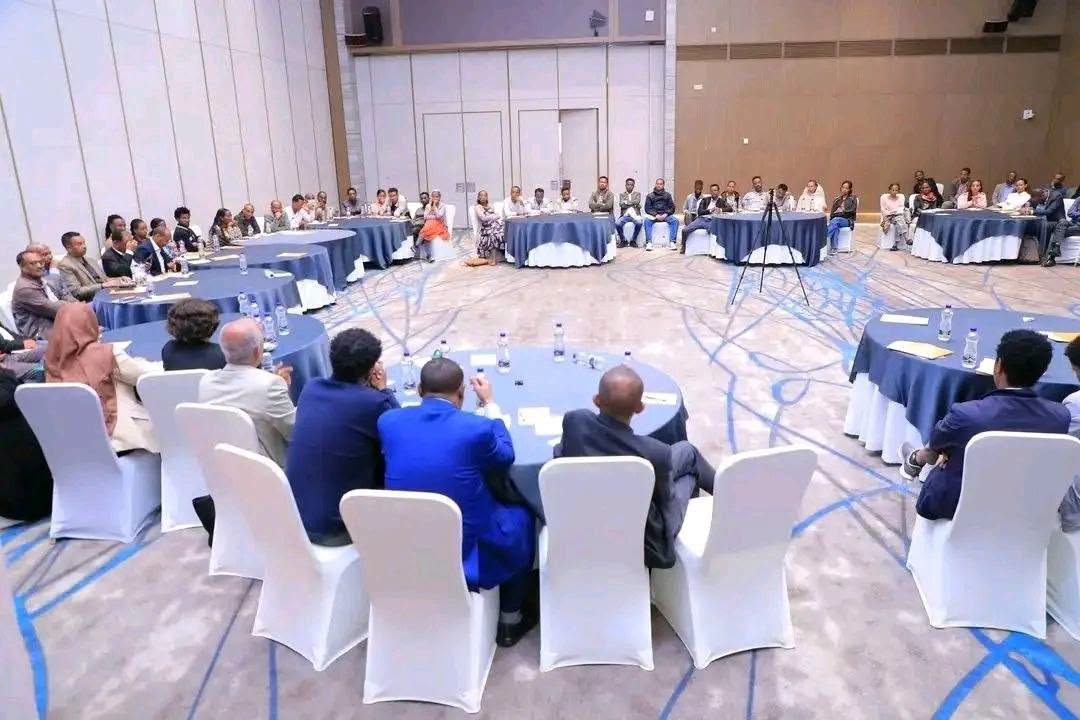
Addis Ababa (AMECO)– A political scientist at Ethiopia’s Jinka University has urged the public to view political friction and debate as vital opportunities for national consensus rather than signs of fragmentation, as the country continues its historic national dialogue.
Misikir Ketema, a lecturer in political science, described the National Dialogue as a crucial peace platform capable of resolving long-standing historical and political disputes, comparing the process to a family coming together to address shared grievances.
According to Misikir, disagreement should not be interpreted as hostilty or failure. “Without friction and debate, dialogue itself would not be necessary,” he said, emphasizing that the primary objective of the process is to forge common ground through rigorous intellectual exchange. He added that the dialogue must not be treated as a political competition with winners and losers, but rather as a mechanism where the best ideas prevail in an atmosphere of mutual respect.
Addressing broader societal concerns, the lecturer stressed that the shared values binding Ethiopians far outweigh their differences. However, he warned against “disinformation” circulated by actors seeking to undermine national unity, advising citizens to remain patient and rely strictly on official updates from the Ethiopian National Dialogue Commission and credible media institutions.
Acknowledging that building statehood and lasting peace requires time, Misikir called on citizens to take collective responsibility for the success of the talks, framing the dialogue as a historical imperative for future generations.