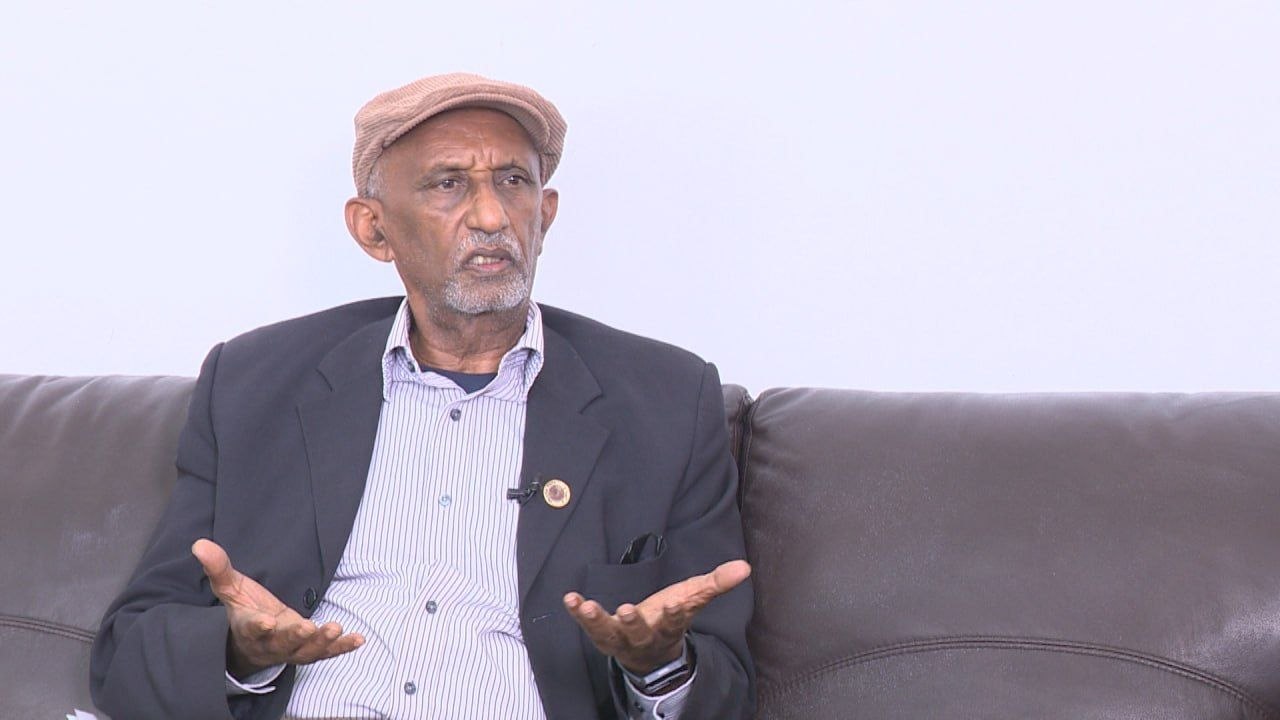
‘The illusion of peace’: TPLF co-founder Dr Aregawi Berhe on the collapse of Pretoria and the road ahead
Date: 24 July 2026 (AMECO)
Meet our guest
Few figures possess the historical weight to critique the Tigray People’s Liberation Front (TPLF) like Dr Aregawi Berhe. Having co-founded the organisation over five decades ago, Dr Aregawi knows the front’s political DNA intimately. In this exclusive interview, he breaks down the psychological and ideological roots driving today’s hardline leadership, explains why Article 10 of the Pretoria Accord terrified party veterans, and outlines why he believes the peace process has effectively collapsed on the ground.
Question: As a founding father of the TPLF, what is your reaction to seeing the movement you built sanctioned by the most powerful nation in the world, the United States?
Dr Aregawi: The TPLF group operating in northern Ethiopia started as a positive organisation. However, through the course of the struggle, it changed its stance on Ethiopia and opted for secessionism, which divides people. It introduced ethnic politics to Ethiopia, as seen in the 1995 constitution (1987 Ethiopian Calendar).
Today, they are continuing to destabilise Ethiopia, opting for a secessionist agenda supported by foreign forces – and obviously by Egypt as well. Politically speaking, we are now in a state of confusion, as the TPLF organises itself to wage war against the federal government of Ethiopia, creating havoc for the people who are now standing up against them. Hopefully, the aspirations of ordinary Tigrayans, together with the federal government, will root out the TPLF and establish stability in Ethiopia.
Question: You’ve called the TPLF a terrorist organisation in the past. Do the new US visa restrictions validate that claim?
Dr Aregawi: Oh, yes. The US government has followed the TPLF’s relationships and actions from the beginning. Initially, Washington supported the TPLF when it was in power, hoping it would follow a democratic path. The US has its own strategic interests in this region and wanted a reliable ally to fight regional terrorism, which built that early relationship.
However, because the TPLF is fundamentally a terrorist organisation from within, those democratic objectives were never met. To make matters worse, they have now turned against the Ethiopian state – a nation that anchors and influences the entire region – and against their own people. The TPLF nullified the Pretoria Agreement, which was sponsored by international partners, including the US, and spearheaded by the African Union.
For all these reasons, the US began imposing targeted sanctions, starting with visa restrictions. I don’t think it will stop there, because the TPLF hardliners will not abandon their aggressive stance. They are mobilising people, conducting forced recruitment, and preparing for war – all of which directly opposes US interests.
Question: In response to the sanctions imposed by the United States, the TPLF denounced the measures and labelled them one-sided. What’s your view on that response?
Dr Aregawi: Well, what else could they say? They have to defend themselves. They thought they were the cherished child of Washington, but US foreign policy doesn’t work that way. For the US, relationships must remain beneficial; when an actor stops being useful, they are set aside. The TPLF completely misread Washington’s stance.
Question: The TPLF claims Washington is ignoring the Ethiopian federal government’s own failures to implement the Pretoria Peace Agreement. Is there truth to that?
Dr Aregawi: As I mentioned earlier, the US was a key sponsor of the Pretoria Agreement and worked hard to make it a reality. It started with a bright light at the end of the tunnel, and initially, all stakeholders cooperated to bring peace to the people who had suffered most.
However, the TPLF leadership soon perceived a direct threat to their own survival within the text of the agreement – specifically Article 10.1. That provision mandates an inclusive interim regional administration incorporating all political forces within Tigray. The TPLF knew that if other Tigrayan political groups joined the administration, those groups would challenge the TPLF’s legacy and hold them accountable for recent actions that dragged the region into war against the central government. They were terrified of that accountability.
Question: In May, the TPLF replaced the post-war Interim Regional Administration in Mekelle. What does this move tell us about the TPLF’s real intentions toward Pretoria?
Dr Aregawi: It demonstrates that they are completely opposed to the Pretoria Agreement. They declared this shift through an illegal, unconstitutional party congress held in direct defiance of the National Election Board of Ethiopia.
By standing against the peace accord, they are choosing to go their own way: establishing a de facto state in Tigray. This move directly violates the constitution, undermines national unity, and rejects the authority of the established federal government.
Question: In that case, when the TPLF initially signed the Pretoria Agreement, was it merely a tactical manoeuvre to buy time?
Dr Aregawi: Absolutely, right from the start. First, they only went to Pretoria because they were losing on the battlefield and the federal government had gained the upper hand. Had the war continued at that pace, it would have been the end of the TPLF. So, they appealed to their international contacts in the US and Europe, who in turn advised the federal government to settle the conflict through negotiations.
For the TPLF, this was purely a tactic to buy time, regroup, reorganise, and prepare for a comeback – which is exactly what they have done. All partners in the Pretoria Agreement should have recognised this dynamic and built stronger safeguards into the accord.
As I noted, the TPLF feared Article 10 because inclusive governance meant non-TPLF organisations like ours would participate in the interim administration. Questions would inevitably be raised about who bears responsibility for past atrocities that cost tens of thousands of lives. Scared of those allegations, the TPLF actively sabotaged the agreement.
Question: The TPLF’s new draft law reportedly mandates compulsory military conscription and up to a 25-year sentence for dissent. What does this say about the movement’s direction under its current leadership?
Dr Aregawi: This directly reflects the TPLF’s underlying political and ideological stance. They do not believe in negotiated settlements; they believe in achieving their ambitions through brute force.
For years, they have claimed that “the TPLF and the Tigrayan people are one and the same”, which is both false and illogical. A political party is an ideological organisation, whereas a population is naturally pluralistic. Acting on this authoritarian mindset, they issued a new declaration forcing every eligible individual into military service to fight the central government.
Anyone who refuses conscription is branded a renegade and a traitor to the Tigrayan people, facing prison sentences ranging from 5 to 25 years – or even the death penalty. This is the classic nature of an authoritarian, ultra-leftist organisation, tracing back to their roots under the Marxist-Leninist League of Tigray (MLLT). It is the behaviour of an authoritarian, almost fascist, entity.
Question: To legitimise these coercive measures, they claim Tigray is under an “existential threat.” How do you respond to that claim?
Dr Aregawi: When a government offers you a peace deal on equal footing in front of the international community, what more could you ask for? Where is the real existential threat?
The only threat they face is one of their own making. When you actively work to dismantle the state and opt for secession, you naturally invite resistance from the Ethiopian public and the federal government that represents them. Their “existential threat” narrative is entirely self-created and self-enforced.
Question: You broke away from the TPLF decades ago. What do you believe are the deepest unaddressed grievances driving today’s hardliners?
Dr Aregawi: It stems from a distorted view of history, combined with an unyielding lust for power and the privileges it provided them for nearly three decades.
Ideologically, they are fixated on the idea that they can only secure their interests through dominance and force – never through compromise or give-and-take. Having ruled Ethiopia for 27 years through coercion, they have internalised the belief that force is the only mechanism that yields results. That mindset has become an ideology in itself. They will continue down this hardline path until they face total political extinction.
Question: Do you believe the Pretoria Agreement can still hold, or has it effectively collapsed on the ground?
Dr Aregawi: It has effectively collapsed on the ground. Looking back, Pretoria was only ever a tactical pause for them. They feigned commitment to a negotiated peace for the international community, but internally, they never wanted it. The moment they reassembled their forces, they resumed their opposition to the accord. The Pretoria Agreement holds no future as long as this TPLF leadership remains in power.
Question: If you could speak directly to the diplomatic community, what would you tell them about the cost of repeating the 2020 conflict, and how to prevent it?
Dr Aregawi: The 2020 conflict was a direct continuation of the TPLF’s core doctrine: that political power must be grabbed and held through military force.
The international community must understand this underlying ideology. When diplomats attempt to facilitate peace between the federal government and the TPLF, they must look at what triggered the previous war. In 2020, TPLF forces advanced as far as Debre Sina, hoping alliance partners – such as OLF-Shene, Fano factions, the Ogaden National Liberation Front, and other regional groups – would join them to march on the capital and recapture power.
The TPLF’s objective is simple: if they can take national power in Ethiopia as they did in the past, they will. If they cannot, they will attempt to secede and declare a regional de facto state in Tigray. International partners must clear their eyes to these dynamics if they hope to foster genuine stability in Ethiopia.