Beyond Cairo’s Veto: How Egyptian Diplomatic Blunders Created the Nile Limbo
By Yohannes Lijalem
Addis Ababa
Egypt’s recurring accusations of “unilateral” operations at the Grand Ethiopian Renaissance Dam (GERD) have devolved into a textbook case of crying wolf. While Addis Ababa offers a flexible, data-driven framework, Cairo’s insistence on a rigid treaty built around colonial-era quotas has paralyzed diplomacy across the Horn of Africa.
Egypt’s diplomatic strategy over the GERD has reached a familiar impasse. While Ethiopia continues to propose a cooperative, win-win operational framework grounded in real-time data sharing, Cairo’s uncompromising demand for a “binding agreement”—and its habitual abandonment of the negotiating table—has trapped the region in an artificial diplomatic limbo.
The Colonial Root: Why Ethiopia Rejects a “Binding Agreement”
Egypt’s demand for a “legally binding agreement” sounds reasonable on the international stage, but Ethiopian negotiators see it as a Trojan horse designed to institutionalize colonial-era hydro-hegemony.
Under a 1959 bilateral treaty between Egypt and Sudan, Cairo allocated itself 55.5 billion cubic meters (bcm) of Nile water annually, granted 18.5 bcm to Sudan, and assigned zero liters to Ethiopia—the source of 85% of the river’s flow.
Signing a binding treaty on Cairo’s current terms would permanently surrender Ethiopia’s sovereign right to develop its own water resources along the Abay River.
“Ethiopia invested billions of dollars out of its empty coffers, not for the project to be hijacked or held hostage by any other country. Ethiopia will never accept such tricked or disguised agreements. If they want an allocation agreement, the Nile Basin Cooperative Framework Agreement is already going to be enforced.”
— Fekahmed Negash, former GERD negotiator
This motive became undeniable during the 2020 Washington talks. Rather than establishing technical rules for a hydroelectric dam, Cairo’s proposed text functioned as a permanent water-allocation regime—forcing Ethiopia to guarantee downstream volume flows even during severe, multi-year droughts.
Equitable Utilization in Practice: Proof Over Politics
Despite Cairo’s warnings of catastrophic water shortages, Ethiopia’s actions on the ground have consistently prioritized the foundational principles of transboundary water management: equitable utilization and the obligation not to cause significant harm.
Rather than filling the 74-billion-cubic-meter reservoir aggressively in one or two seasons, Ethiopia executed a multi-year, staged filling strategy calibrated directly to annual rainfall. This allowed downstream facilities in Sudan and Egypt to adapt smoothly without disruption.
“Even if Ethiopia did the planning of this dam alone, we considered the concerns of downstream countries,” says Negash. “The mindset of the 18th century should be avoided. Currently, the main principles governing transboundary water resource management are equitable utilization, an obligation not to cause significant harm, and genuine cooperation.”
Technical Guidelines Versus Political Treaties
Because Ethiopia’s operations are non-confrontational, Addis Ababa draws a sharp distinction between functional technical cooperation and a binding political treaty. Ethiopia remains committed to data sharing, joint monitoring, and operational coordination through flexible, non-binding guidelines.
Article 5 of the 2015 Declaration of Principles (DoP) explicitly codifies this distinction by calling for shared guidelines for filling and operation—not a rigid international treaty.
“Article 5 talks about the need for the countries to agree on guidelines for first filling and annual operation,” Negash explains. “It is a simple tabulated instrument that can be followed during filling and annual operation—very simple technical work.”
In 2018, a joint panel of 15 technical experts drafted these exact operational guidelines. Yet despite consensus among researchers, Egyptian political leadership walked away, choosing to boycott technical progress in favor of international political pressure.
Manufactured Deadlocks and Diplomatic Blunders
This pattern of abandoning negotiations exposes a deliberate tactic: manufacturing diplomatic deadlocks to justify external intervention and brand standard dam operations as “unilateral.”
“In the process of engagement with Egypt, they cause a delay, immediately start blaming Ethiopia for the delay, and then change that blame into an accusation,” says Negash. “They raise an issue which they know cannot be accepted by Ethiopia, and when Ethiopia rejects it, they go to accusation.”
Redefining Nile Basin Security
Cairo’s strategy of boycotting negotiations and crying wolf on the world stage has run its course. The GERD standoff marks the definitive end of 20th-century hydro-hegemony in the Horn of Africa. With over 60 million Ethiopians still living without electricity, Addis Ababa treats power generation as a non-negotiable prerequisite for economic survival and human dignity.
By asserting equitable utilization over historic vetoes, Ethiopia is establishing a new baseline for Nile diplomacy: offering downstream partners operational transparency, win-win guidelines, and a shared future, while proving that no single nation holds a monopoly over the river.
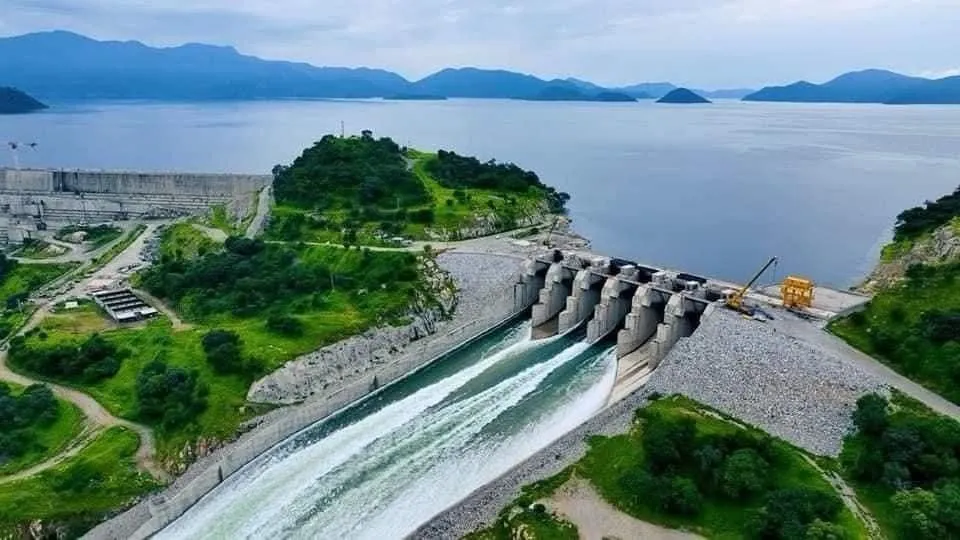
The operational integration of the Grand Ethiopian Renaissance Dam marks a historic turning point for the Nile Basin, signaling a decisive shift away from single-nation water monopolies toward shared, equitable resource utilization.
Anchored in the 1997 UN Watercourses Convention and the Nile Basin Cooperative Framework Agreement (CFA), modern international water law balances a nation’s right to resource development with the imperative duty to prevent significant harm to its downstream neighbors.
Empirical Evidence of Safety
To challenge persistent claims that filling the reservoir would trigger severe water shortages downstream, Ethiopia executed a multi-year, staged filling strategy built on three core operational pillars:
Climate-Calibrated Rates: Fill schedules were dynamically adjusted in direct response to annual rainfall patterns.
Continuous River Flow: The massive 74-billion-cubic-meter reservoir reached full capacity without disrupting essential water supplies in Sudan or Egypt.
Non-Consumptive Power Generation: Water flows through turbines to generate electricity before returning uninterrupted to its natural riverbed downstream.
“Even if Ethiopia planned this dam independently, we prioritized the concerns of downstream nations,” noted Fekahmed Negash. “We implemented every measure necessary to prevent significant harm. The zero-sum mindset of the 18th century must be abandoned. Today, transboundary water management is guided by three principles: equitable utilization, the obligation to avoid harm, and genuine cooperation.”
By demonstrating that upstream energy generation can proceed without reducing downstream water availability, Ethiopia’s operational strategy offers clear empirical proof that regional energy security and downstream water security can harmoniously coexist.