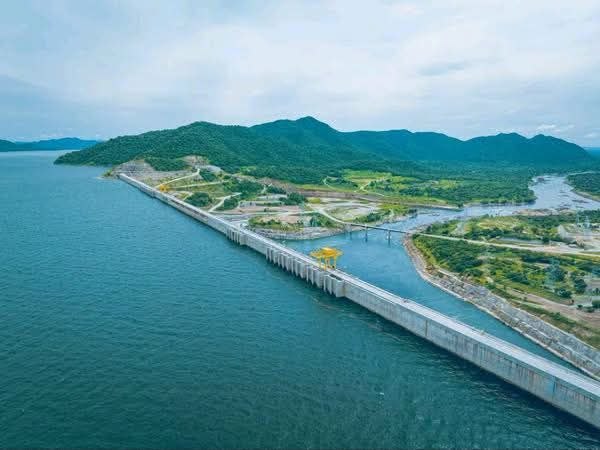
The completion of the Ethiopian Renaissance dam marks a new chapter – despite Cairo’s pushback
For decades, Egypt relied on colonial-era agreements to maintain dominance over the Nile. Ethiopia’s landmark infrastructure project reshapes the Horn of Africa’s geopolitical reality.
The construction and filling of the Grand Ethiopian Renaissance Dam (GERD) have opened a new chapter for regional power generation and cross-border cooperation in the Horn of Africa. However, Egyptian media and government officials continue to exert political pressure by framing the project as an existential threat that induces water scarcity. In reality, the filling and operation of the dam have not reduced the overall volume of water received downstream by either Sudan or Egypt.
Ethiopia contributes between 85 per cent and 86 per cent of the total water volume to the Nile River system, with the Blue Nile alone accounting for more than 59 per cent of the total flow originating from the Ethiopian highlands. The primary purpose of the GERD is to generate hydroelectric power, not to consume or divert water. As the Ethiopian government has repeatedly affirmed, the dam is a non-consumptive infrastructure project, and downstream countries have experienced no structural reduction in overall water flow. Furthermore, the dam plays a vital role in regulating river levels and mitigating the chronic, destructive flooding that Sudan historically faced.
Despite these hydrological realities, the underlying motive behind Cairo’s objections is not a quest for fair and equitable utilization of Nile waters, but an effort to maintain regional dominance by clinging to unjust, colonial-era agreements signed in 1929 and 1959 that entirely excluded Ethiopia and other upstream riparian states.
Egypt’s water politics and a history of destabilisation
Egypt’s desire for strategic dominance in the Horn of Africa is not a new phenomenon. In the late 19th century, after Egyptian ruler Khedive Ismail Pasha launched invasions into Ethiopia and suffered decisive defeats at the Battles of Gundet (1875) and Gura (1876), Cairo devised a new strategic approach.
This tactic was heavily influenced by Swiss-born administrator and officer Werner Munzinger, whose policy recommendations advocated keeping Ethiopia internally fragmented and weak. Recognizing that direct military conquest was untenable, Cairo increasingly sought to leverage internal divisions and foster conflict within Ethiopia.
This regional strategy has manifested in several ways throughout modern history:
-
Proxy and insurgent support: Seeking to remain the primary beneficiary of the 1959 Nile water allocation agreement, Cairo provided political and material support to the Eritrean Liberation Front (ELF) in the 1960s, backed Somali President Siad Barre during the 1977 Ogaden War, and has historically extended influence among domestic Ethiopian opposition factions.
-
Security pressure around the GERD: Following the launch of the GERD project, geopolitical tensions escalated in the region, with security challenges in the Benishangul-Gumuz region—where the dam is located—aimed at disrupting critical infrastructure development and local stability.
-
Diplomatic blockades: A major pillar of Cairo’s strategy has been diplomatic maneuvering aimed at blocking Ethiopia from securing international funding, development loans, and multilateral assistance for its water and energy infrastructure.
Ethiopian resilience and the triumph of the Renaissance dam
Although Egyptian policymakers historically calculated that internal subversion and external economic pressure would force Ethiopia to capitulate, current realities demonstrate the opposite.
History shows that when faced with external pressure, Ethiopians possess a deeply rooted tradition of setting aside internal political differences to unite around core national priorities. Amid immense diplomatic and geopolitical pressure, the GERD was constructed primarily through widespread public domestic contributions, bond purchases, and national participation—a testament to unyielding resilience.
Ultimately, arguments citing severe water shortages caused by the GERD lack scientific and hydrological foundation; they function primarily as political rhetoric designed to preserve unilateral water arrangements. Resolving internal differences through dialogue and maintaining national cohesion remain essential for long-term regional security. The completion of the Grand Ethiopian Renaissance Dam stands as a monumental achievement of national resilience and sustainable development for generations to come.