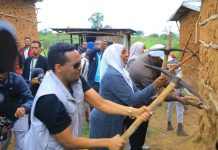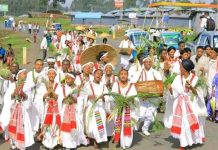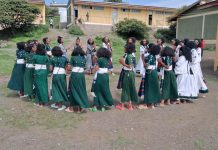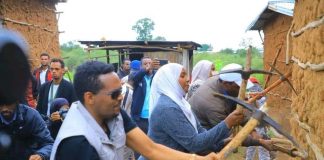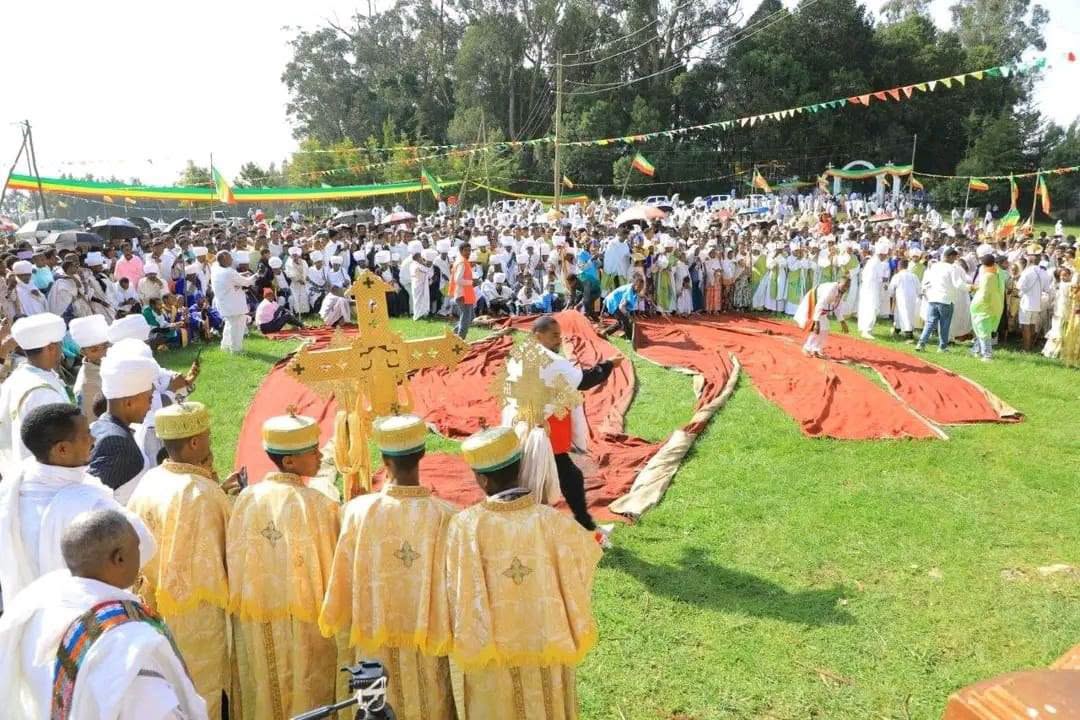
Addis Ababa (AMECO)— Thousands of white-robed Ethiopian Orthodox faithful have gathered in the historic town of Debre Tabor in South Gondar to celebrate the Feast of the Transfiguration—locally known as Buhe—in a vibrant display that bridges ancient liturgy, community tradition, and youth heritage.
Clad in traditional white attire (tsa’eda), worshippers packed the grounds of the Debre Tabor Debre Le’ulan Medhane Alem Church, transforming the hillside into a sea of prayer, sacred chant, and praise. The annual festival, which commemorates the revelation of Christ’s divine glory on Mount Tabor, stands as one of the most prominent events on the Ethiopian Orthodox Tewahedo Church calendar.
Unlike other major holy days in the Orthodox tradition that take their names from specific divine acts, the festival of Debre Tabor derives its title directly from the physical setting of the miracle itself, according to Yeneta Betsiha Alemu, Chief Scholar of the Four Assemblies at the local Medhane Alem Church.
“Debre Tabor is one of the nine major feasts of Our Lord,” Yeneta Betsiha said, citing the biblical narrative from the Gospels where Christ ascended a high mountain with the apostles Peter, James, and John, and was transfigured before them alongside the prophets Moses and Elijah. “In Orthodox theology, this event marks the fulfilment of Old Testament prophecy in New Testament practice, the manifestation of the Holy Trinity, and the ultimate triumph over evil.”
The celebration in Debre Tabor carries deep local resonance, shaped by a distinct historical narrative. Tradition holds that the 14th-century Ethiopian monarch Emperor Saifa Arad named the settlement after returning from a pilgrimage to Jerusalem. Struck by the topographical similarity between the local landscape and Mount Tabor in the Holy Land, the emperor designated the area Debre Tabor (“Mount Tabor”).
Local ecclesiastical scholars draw striking geographic parallels between the two sites: just as the biblical Mount Tabor overlooks the Jordan River and Jerusalem, Ethiopia’s Debre Tabor offers sweeping vistas extending toward Lake Tana and the surrounding highlands.
Beyond its biblical symbolism, the festival is renowned for its living cultural traditions, passed down through generations. Young boys crack hand-woven leather whips (jiraf) across the town, a symbolic recreation of the thunderous voice heard from the divine cloud during the Transfiguration. Children also travel neighbourhood to neighbourhood singing customary Buhe hymns, receiving loaves of freshly baked mulmul bread from households. At nightfall, families ignite bundles of wooden torches (chibo), commemorating the parents who once lit torches to search for young shepherds lingering late on the mountain during the miraculous event.
Debre Tabor also holds a unique place in national church history as the sole custodian and living archive of the Tekle Aquaquam—a prestigious, highly complex school of liturgical movement, sistrum-rattle rhythm, and sacred chant. During the feast, senior clergy perform these intricate rites alongside civic leaders, creating an atmosphere where state history, faith, and local identity converge.
“This ancient town has preserved what it received from the fathers without corruption,” Yeneta Betsiha added. “It stands as a testament to history, faith, and the enduring strength of our values.”