
AMECO AFRICA / ADDIS ABABA
Following years of strategic patience in the face of cross-border incursions and covert proxy warfare, Ethiopia’s expulsion of foreign diplomats marks a decisive shift from diplomatic restraint to the uncompromising defence of state sovereignty.
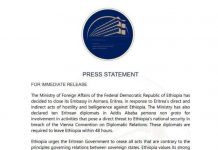
When formal diplomatic notifications were served by Ethiopia on 1 October 2026, delivering 48-hour expulsion notices to ten Eritrean diplomats alongside an Egyptian envoy, the signal sent across regional capitals was unmistakable: Ethiopia’s period of unilateral tolerance had reached its definitive end. The simultaneous closure of Ethiopia’s embassy in Eritrea capped a long-standing, systemic assault on Ethiopian statehood—a deliberate campaign of covert subversion and asymmetric hostility that left the host nation with no choice but to act.
Why now? For years, the federal government in Ethiopia exercised maximum restraint, granting every benefit of the doubt to preserve fragile regional stability despite mounting evidence of covert interference. However, that restraint was met not with de-escalation, but with emboldened hostility. The tipping point arrived when host-state intelligence verified that foreign personnel were actively abusing diplomatic immunity to facilitate internal subversion, collude with domestic disruptive factions, and advance a multi-front campaign designed to fracture the nation from within. Facing an imminent threat to its statehood, Ethiopia moved to invoke its fundamental rights under Article 51 of the United Nations Charter and the 1961 Vienna Convention on Diplomatic Relations, establishing that sovereign self-defence is both a legal mandate and a national imperative.
The anatomy of cross-border interference
Time and again, unmistakable evidence has exposed direct incursions across the Ethiopian border in clear violation of international law. Publicly documented video evidence and intelligence reports confirm that foreign forces have repeatedly breached Ethiopia’s territorial boundaries while conducting coordinated propaganda campaigns aimed at destabilising the state. By aligning with hardline elements and colluding with domestic armed groups and extremist factions, hostile foreign actors have actively sought to dismantle Ethiopia’s statehood from within.
Despite widespread public knowledge of these hostile acts, the Government of Ethiopia consistently exercised maximum strategic restraint, opting for diplomatic patience to preserve regional stability. Far from de-escalating, foreign vectors were emboldened by this restraint, intensifying their subversive operations across the border. The Ethiopian government’s decisive diplomatic action—closing its embassy in Eritrea and expelling foreign agents—delivers an unequivocal message: covert aggression and acts of subversion against Ethiopia’s national sovereignty will no longer go unpunished.
Systemic abuse of diplomatic immunity
The international legal order rests upon strict adherence to state sovereignty, territorial integrity, and non-interference in domestic affairs, as codified under Article 2(7) of the United Nations Charter. The persistent acts of hostility directed against Ethiopia represent a direct violation of these foundational tenets.
-
Breach of the Vienna Convention: Official findings confirm that personnel operating under diplomatic cover in Ethiopia actively engaged in intelligence gathering and operational facilitation that posed direct threats to host-nation security. This constitutes a direct violation of Article 41(1) of the 1961 Vienna Convention on Diplomatic Relations, which explicitly mandates that diplomatic personnel must not interfere in the domestic affairs of the receiving state.
-
Violations of Customary International Law: As established in international jurisprudence—most notably by the International Court of Justice in Nicaragua v. United States—providing safe havens, logistics, or operational assistance to irregular armed groups targeting a sovereign nation constitutes an unlawful act of indirect aggression.
-
Convergence of Hostile Vectors: The simultaneous declaration of persona non grata status against Egyptian diplomat Ahmed Moharam Ahmed Soliman alongside ten Eritrean officials highlights a documented convergence of foreign interests seeking to keep Ethiopia internally distracted and restrict its socio-economic and strategic development.
The international legal mandate for self-defence
International law does not require a sovereign state to endure covert subversion or intelligence operations passively. When confronted with persistent hostility, a nation holds unambiguous legal authority to execute defensive countermeasures:
-
Inherent Right to Self-Defence (UN Charter Article 51): Article 51 confirms every sovereign nation’s inherent right to safeguard its political independence and territorial integrity against both conventional military threats and state-sponsored asymmetric aggression.
-
Absolute Diplomatic Retortion: Under Article 9 of the 1961 Vienna Convention on Diplomatic Relations, Ethiopia possesses the absolute, unquestioned right to declare any member of a diplomatic mission persona non grata at any time and without obligation to publicly detail sensitive intelligence, providing a recognised legal tool to dismantle foreign espionage rings.
-
Proportional Countermeasures: The closure of the embassy in Eritrea and the enforcement of a strict 48-hour departure window represent measured, non-kinetic countermeasures strictly proportioned to eliminate immediate threat vectors without precipitating unnecessary regional escalation.
Enforcing red lines while preserving regional balance
While asserting its sovereign mandate, Ethiopia maintains a principled distinction between foreign ruling regimes and broader regional stability:
-
Distinction Between Regime Actions and Civilians: Official state communications explicitly affirm Ethiopia’s deep appreciation for the historical, cultural, and human ties with the Eritrean public, emphasising that security countermeasures target hostile state manoeuvres rather than civilian populations.
-
Commitment to Horn Integration: By anchoring its actions firmly within international law, Ethiopia demonstrates to regional partners and the African Union that its measures are defensive necessities aimed at maintaining regional balance, peaceful coexistence, and economic integration.
-
Enforcement of Sovereign Red Lines: The joint diplomatic action addressing hostile vectors from both Eritrea and Egypt establishes an unambiguous boundary: Ethiopia will not allow its territory or internal security to be used as a battlefield for foreign geopolitical agendas.
Conclusion
The legal and factual baseline supporting Ethiopia’s actions is definitive. Facing coordinated hostility that directly breaches the UN Charter and the Vienna Convention, Ethiopia’s closure of its embassy in Eritrea and the targeted expulsion of foreign diplomatic personnel are lawful, necessary exercises of sovereign authority.
To guarantee long-term stability and shield the nation from external sabotage, Ethiopia must unyieldingly enforce these established red lines, systematically dismantle foreign intelligence operations, and leverage international legal frameworks to hold hostile state actors accountable. Protecting the homeland requires uncompromising resolve: Ethiopia holds the unquestionable legal, moral, and strategic authority to protect its national sovereignty, defend its vital interests, and ensure its enduring statehood.