By Yohannes Lijalem
Addis Ababa, 10 Nov 2026. A European can now cross most of the Union’s internal borders without stopping, and can work, study and trade across the member states of one economic community. It is not a law of nature. For the people of East Berlin, it was certainly not so before 9 November 1989.
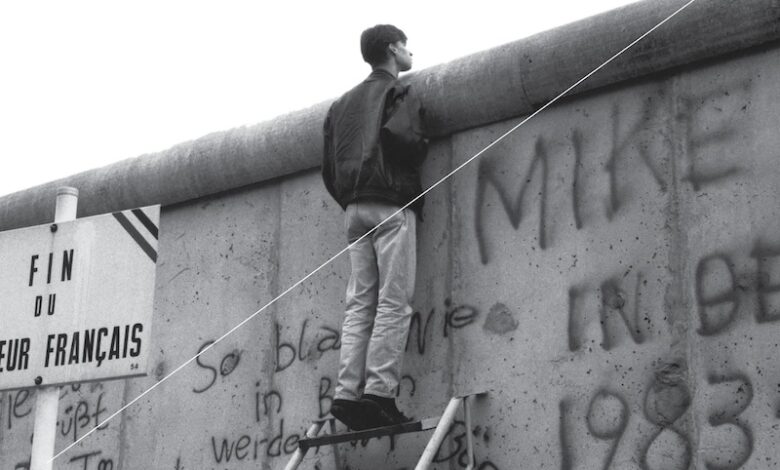
On the night of 9 November 1989, a party official’s answer to a reporter’s question opened the Berlin Wall after 28 years of division. Germany marked the 37th anniversary on Monday.
The night is remembered as a German triumph. Its larger lesson belongs to everyone who has since crossed a frontier unchallenged. A wall is the instrument of unilateral imposition: built by one side, for one side, and enforced at everyone else’s expense. A bridge must be built from both banks, by agreement. Tyranny needs walls.Democracy can afford to leave the gates open.
The night the Wall opened
It was a question about timing. On the evening of 9 November 1989, Günter Schabowski, a member of East Germany’s Politburo, announced new travel rules at a press conference. Asked when they would take effect, he answered: immediately.
Within hours, crowds had gathered at the city’s border crossings. By around midnight, every one of them was open.The Wall, which had stood since August 1961, stopped being a barrier. East Berliners poured into the West, and Berliners from both halves of the city climbed onto the concrete together.
The Wall and its cost
The Wall had gone up just as abruptly. The order to build it was given on the night of 12-13 August 1961 by Walter Ulbricht, the East German leader. For the 28 years that followed, it was defended with lethal force.
The most rigorous accounting of the cost comes from the Centre for Contemporary History in Potsdam and the Berlin Wall Foundation. After recording and checking 576 cases, their joint research documents at least 140 people who were killed at the Wall, or who died in circumstances directly connected with the East German border regime, between 1961 and 1989.
They include people shot or fatally injured while trying to flee, and people who died in escape attempts with no one else involved. They also include people with no intention of fleeing, among them West Germans who climbed the Wall and East Germans mistaken for escapees, as well as border guards killed in connection with escapes. The research was set up to settle conflicting lists, and to record the life story of every victim.
Germany made whole
The Wall did not vanish overnight. Its demolition came later, through 1990. Germany was reunited that year, and a country divided for more than four decades was whole again.
A Europe remade
The consequences did not stop in Berlin. The European Union was not created that night. But the end of the division of Berlin and Germany made possible the wider community of East and West that Europeans went on to build, one that put its faith in agreed rules over the will of the strongest, and in treaties over force.
Europe’s open borders and single economic community are a victory, won by the people of Europe: by those who filled the streets in 1989 and by those who built the institutions that followed. What people have won, people can lose.
The lesson for a restless world
In today’s restless world, walls are rising again. Borders are being redrawn by unilateral attempts. Democracy is openly challenged. Vulnerable migrants and other minorities are scapegoated for economic woes.
The lesson Berlin teaches is simple, yet profound. Walls are not the answer. Letting freedom reign, and nurturing human creativity and enterprise, is the key. Democracy and the rules-based international order must be protected in Europe, and everywhere across the globe.