
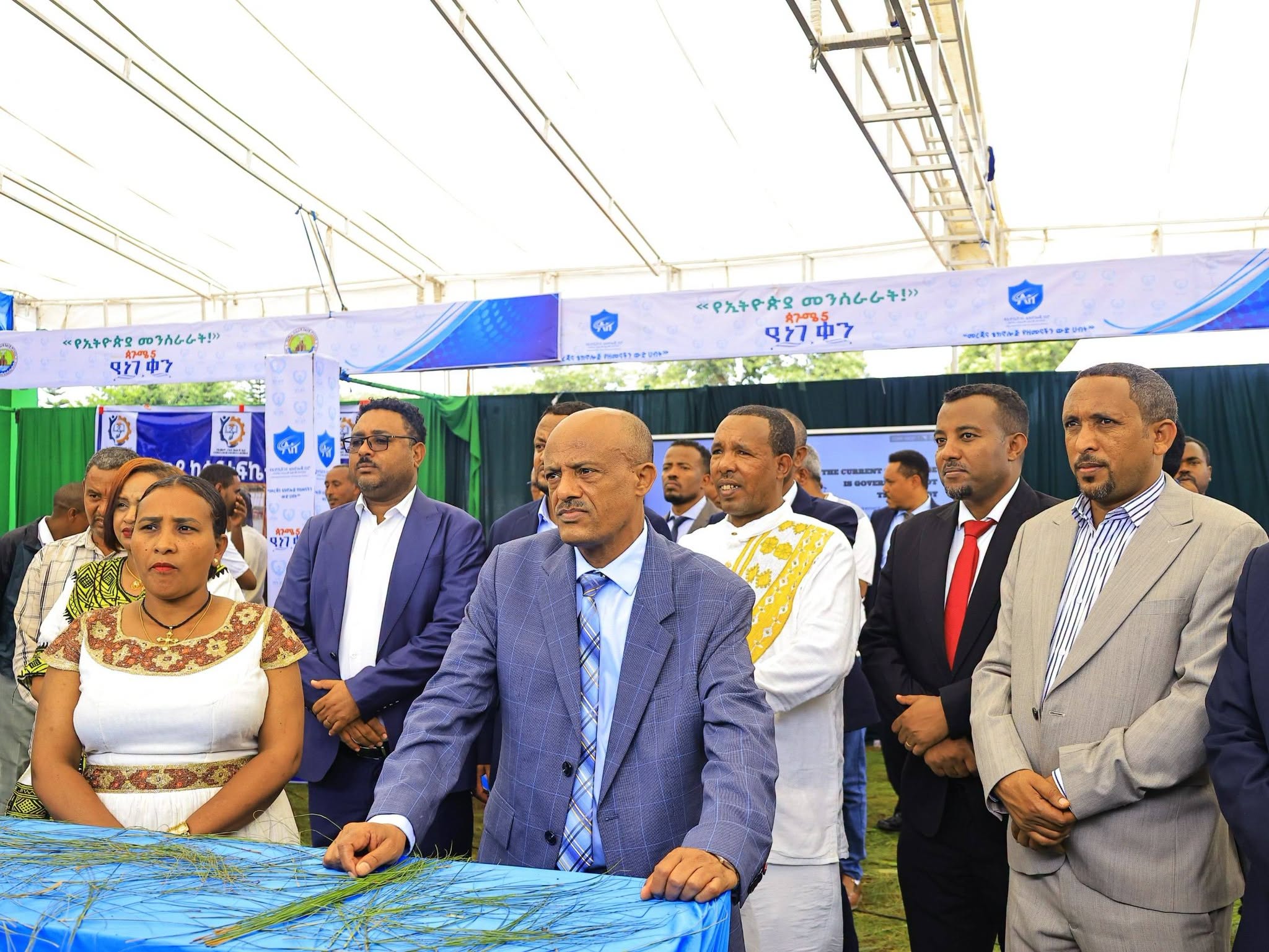
Addis Ababa (AMECO) – The Amhara regional government has pledged to accelerate digital public service reforms and expand one-stop administrative centres to resolve long-standing service bottlenecks and boost local livelihoods.
The commitment was announced during events marking Pagume 5 — designated across the region as “The Day of Tomorrow” (“የነገው ቀን”) — organized jointly by the regional bureaus of civil service, job creation, agriculture, innovation and technology, and the disaster risk management commission.
Highlighting practical administrative solutions implemented over the past year, Banchiamlak Gebre Mariam, head of the Amhara Civil Service and Human Resource Development Bureau, said the rollout of the government-backed “Mesob One-Stop Service” model had significantly reduced public bureaucracy and improved service delivery.
To reinforce oversight and institutional efficiency, authorities have digitized over 96% of personnel records for regional government officials and civil servants. In the coming fiscal year, regional authorities plan to scale up the Mesob one-stop framework across additional municipalities to address good governance challenges directly.
The administrative reforms feed into broader national and regional strategies, including the “Digital Amhara 2030” initiative, the Digital Civil Service program, and the “Ethio Coders” technical training scheme.
The Pagume 5 events — which included community meal-sharing for low-income residents, policy panel discussions, and technology exhibitions — formed part of broader national commemorations held under the banner of “Ethiopia’s Resurgence”.
Pagume, the 13th month in the Ethiopian calendar, consists of five or six transitional days bridging the outgoing and incoming years. Banchiamlak noted that the period serves as a critical window for institutions to evaluate annual performance, address operational shortcomings, and set strategic priorities for sustainable regional development.