By Andinet Enyew
As the nation attempts to plant 800 million seedlings in 24 hours, President Taye acknowledges past environmental failures while highlighting measurable reforestation efforts.
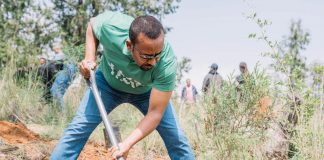
Addis Ababa, (AMECO) — President Taye Atske Selassie joined thousands of citizens on Monday to plant tree seedlings, anchoring a massive single-day push to put 800 million saplings into the ground across Ethiopia.
The effort forms the centerpiece of the 2026 phase of the country’s Green Legacy Initiative, operating under the campaign theme “Let’s Plant Hope.” Taking part alongside local residents, President Taye framed the initiative as a direct structural response to decades of environmental neglect that left Ethiopia vulnerable to recurring droughts and severe land degradation.
Reversing Decades of Environmental Neglect
A solutions-oriented approach to ecological restoration requires confronting historical bottlenecks. For decades, despite possessing rich natural forests, Ethiopia lacked a sustained national policy to protect and expand its canopy cover—a deficit that contributed directly to soil erosion, water table depletion, and agricultural instability.
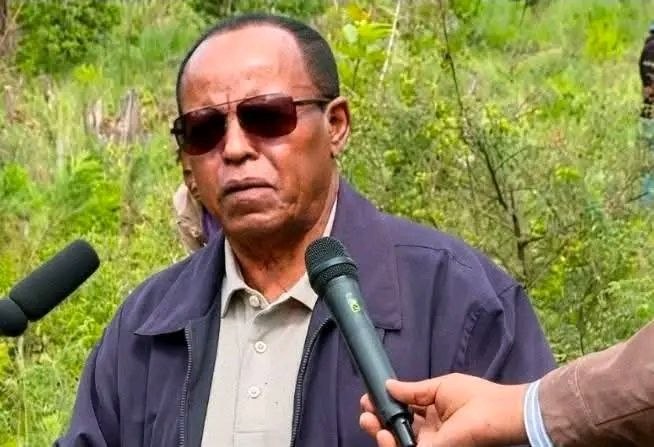
Addressing participants during the campaign, President Taye frankly assessed this historical context, noting that the country had paid a heavy economic and human price for failing to protect its natural capital.
“The years during which the Green Legacy Initiative has been implemented are the years in which many of our aspirations have become reality,” Taye said, pointing to recent gains in ecosystem restoration and reforestation as evidence that state-led environmental intervention can reverse long-term degradation.
From Mass Mobilisation to Ecosystem Recovery
Launched in 2019 under Prime Minister Abiy Ahmed, the Green Legacy Initiative has evolved from a seasonal planting event into a broader ecological framework aimed at strengthening climate resilience, boosting food security through agroforestry, and restoring degraded watersheds.
While single-day planting drives serve as primary catalysts for civic engagement, environmental policy experts and government officials increasingly stress that the ultimate success of the program depends on post-planting care, sapling survival rates, and integrating community land management into rural economies.
By linking single-day national targets with multi-year watershed management, Ethiopia’s model continues to test how rapid public mobilisation can address systemic environmental vulnerability across the Horn of Africa.