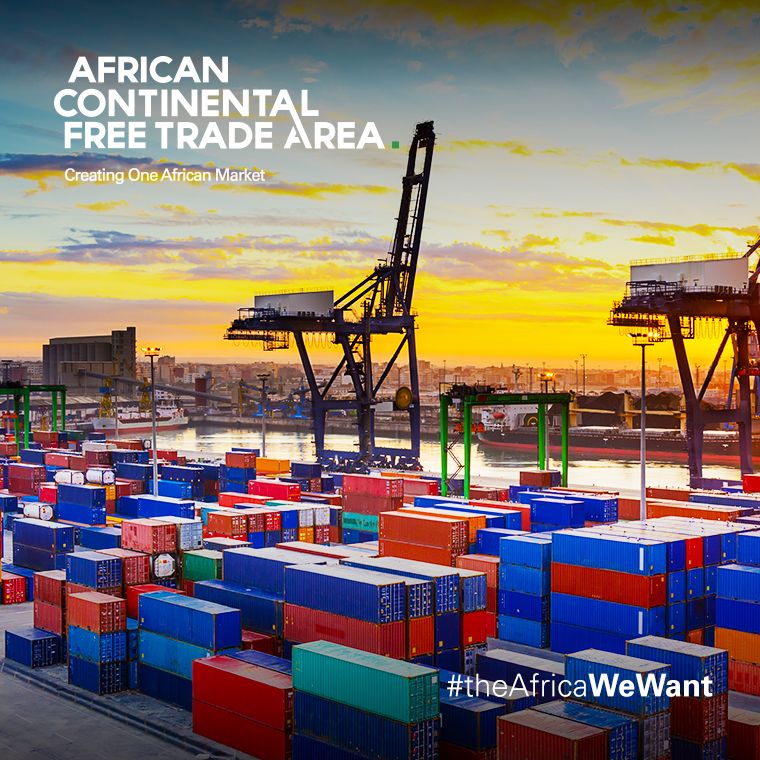
Unlocking Continental Trade: How the AfCFTA is Reshaping Ethiopia and Beyond
By Miwodew Muluye
Addis Ababa, (AMECO) – The African Continental Free Trade Area (AfCFTA) stands as one of the most significant regional integration initiatives in modern economic history. Uniting 54 of the 55 African Union (AU) member states, the agreement establishes a single market covering 1.4 billion consumers with a combined nominal Gross Domestic Product (GDP) of $3.4 trillion.
As implementation progresses, the trade bloc aims to eliminate trade tariffs, streamline cross-border logistics, and shift the continent from a supplier of raw commodities into a unified manufacturing powerhouse.
Key AfCFTA Metrics at a Glance
-
AU Member Participation: 54 nations signed; 50 nations ratified
-
Total Market Reach: 1.4 billion consumers
-
Combined Nominal GDP: $3.4 trillion
-
Continental Income Impact: +$450 billion projected by 2035 (World Bank)
-
Poverty Alleviation Goal: Up to 30 million people lifted out of extreme poverty
1. Core Objectives and Implementation Progress
According to data from the United Nations Economic Commission for Africa (UNECA), intra-African trade historically accounted for only 14% to 16% of the continent’s total commerce—significantly trailing regional trade levels in Europe (68%) and Asia (59%). The AfCFTA framework seeks to alter this baseline through three core pillars:
-
Market Unification: Facilitating the free movement of goods, services, capital, and labor across African borders.
-
Tariff Liberalization: Phasing out duties on 90% of non-sensitive goods over a 5- to 10-year period, alongside eliminating non-tariff barriers (NTBs) such as excessive border paperwork and conflicting technical standards.
-
Value-Chain Integration: Encouraging the domestic processing of agricultural and mineral resources into manufactured exports prior to shipment.
Current Status
-
Member State Participation: Fifty-four AU nations have signed the accord, with 50 formal ratifications deposited. Eritrea remains the sole AU member state that has neither signed nor ratified the agreement.
-
Guided Trade: Under the AfCFTA Secretariat’s Guided Trade Initiative (GTI), thousands of official Certificates of Origin have been issued across participating states to facilitate preferential tariffs, aiming for full market liberalization by 2030.
2. Strategic Benefits and Realities for Ethiopia
For Ethiopia, East Africa’s largest economy, participation in the AfCFTA offers substantial commercial opportunities while presenting specific economic considerations.
Market Access and Export Diversification
Ethiopian enterprises gain preferential entry into a continent-wide market. Early trade flows under preferential rules have allowed Ethiopian exporters to ship processed agricultural goods, meat, coffee, fruits, vegetables, pulses, and oilseeds to regional destinations, including Kenya, Somalia, and South Africa.
Easing Foreign Exchange Friction via PAPSS
To help mitigate structural foreign exchange shortages, Ethiopia’s banking sector is integrating with the Pan-African Payment and Settlement System (PAPSS). Developed by Afreximbank in collaboration with the AfCFTA Secretariat, PAPSS enables cross-border clearing in domestic currencies.
While central bank analysts note that PAPSS does not eliminate overall foreign exchange reserve requirements, it significantly lowers transaction costs and reduces immediate reliance on third-party hard currencies like the US dollar or euro for intra-African trade.
Logistics Infrastructure
Ethiopia’s trade potential is anchored by two major logistics assets:
-
Aviation Network: Ethiopian Airlines’ cargo fleet and network across more than 60 African destinations provide physical transport capacity for high-value and perishable exports.
-
Maritime Linkages: Proximity to the Port of Djibouti serves as a primary trade corridor connecting manufacturing hubs in East Africa to regional sea lanes.
Economic Projections
According to country-level empirical research utilizing Global Trade Analysis Project (CGE-GTAP) modeling, full AfCFTA execution could increase Ethiopia’s real GDP by 9.5% by 2030. The same modeling indicates national poverty levels could fall from 23.5% down to 20.7% as employment expands in light manufacturing and agriculture.
3. Global Geopolitics and Trade Realignment
Beyond the continent, a unified African market alters global commercial and diplomatic dynamics:
-
Bargaining Leverage: Operating as a single trade bloc grants African nations stronger collective leverage in multilateral negotiations at the World Trade Organization (WTO) and during bilateral engagements with major economic powers.
-
South-South Trade Growth: World Bank projections suggest that as continental manufacturing capacity develops, exports from African countries to international partners could increase by up to 32% by 2035, driven by expanded regional supply chains.
-
Crisis Resilience: Regional market integration provides a buffer against external economic shocks, global tariff disputes, and international supply chain disruptions.
4. Key Implementation Challenges
While the economic potential is significant, policy analysts highlight critical hurdles that member states must address:
Editorial Takeaway: Tariff elimination on paper does not automatically guarantee trade expansion. Structural success depends on addressing physical infrastructure deficits and mitigating short-term fiscal losses.
-
Fiscal Revenue Impact: Tariff reductions can lead to short-term customs revenue losses for developing nations. To mitigate this impact, Afreximbank established a $10 billion AfCFTA Adjustment Fund to assist state parties during the transition.
-
Non-Tariff Barriers: Complex border checks, varying health and safety standards, and administrative delays remain primary bottlenecks to smooth cross-border trade.
-
Infrastructure Deficits: Realizing regional trade potential requires ongoing capital investment in cross-border roads, rail lines, cold-chain storage, and digital payment systems.
Conclusion
The African Continental Free Trade Area marks a fundamental transition from historical economic fragmentation toward regional integration. For Ethiopia, the framework offers a structured mechanism to expand exports, attract foreign direct investment, and support domestic manufacturing. As participating nations continue harmonizing regulatory standards and investing in trade infrastructure, the continent moves closer to achieving long-term economic self-reliance.