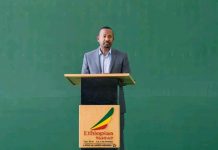
Addis Ababa ( AMECO)– Prominent Indian international digital news platform Firstpost has released a major feature detailing Ethiopia’s sweeping economic transformation, underscoring how massive infrastructure investments and key economic reforms are propelling the nation forward as a powerhouse in the Horn of Africa. In a segment dedicated to the nation’s development trajectory, the channel highlighted Ethiopia’s shift away from historic challenges toward a future powered by multi-sectoral growth spanning energy, aviation, mining, agriculture, and digital technology.
The report emphasized the central role of the Grand Ethiopian Renaissance Dam (GERD), identifying it as the foundation of the nation’s industrial ambitions. The news feature underscored the dam’s unique national character, emphasizing that the project was realized through domestic resource mobilization.“Ethiopia never took a single Birr in terms of aid or loan for constructing the Renaissance Dam,” the report highlighted, noting that by exporting clean power to Kenya, Djibouti, and Sudan, the nation is turning electricity into vital foreign currency while strengthening regional integration.
Turning to the logistics sector, the program highlighted the construction of the 12.5 billion USD Bishoftu International Airport, which is projected to handle up to 110 million passengers and nearly 4 million tons of cargo annually. The initiative aims to solidify Addis Ababa’s position as a premier global aviation hub linking Africa with Europe, Asia, and West Asia.”Reports say the new 12.5-billion-dollar Bishoftu International Airport currently under construction will eventually handle up to 110 million passengers every year and nearly 4 million tons of cargo… If completed as planned, it will rank among the largest aviation hubs in the world… designed to position Addis Ababa as a major gateway linking Africa, Europe, Asia, as well as West Asia.”, the resport said.
In the agricultural and industrial sectors, the report drew attention to large-scale efforts toward food self-sufficiency, including a 2.5 billion USD fertilizer project in the Somali region designed to produce 3 million tons of urea annually.It also noted the expansion of gold production through projects like Kurmuk Gold as key drivers for foreign exchange diversification.”Beneath Ethiopia’s soil, another economic revolution is underway. The country is expanding its mining industry with projects like Kurmuk Gold emerging as new sources of foreign currency.”
Furthermore, the broadcast cited structural policy moves that have opened previously restricted sectors—including telecommunications, banking, real estate, and capital markets—to private capital.The feature concluded by affirming that Ethiopia’s ambitious project implementation and pragmatic economic policy continue to reshape the broader economic landscape of the continent.