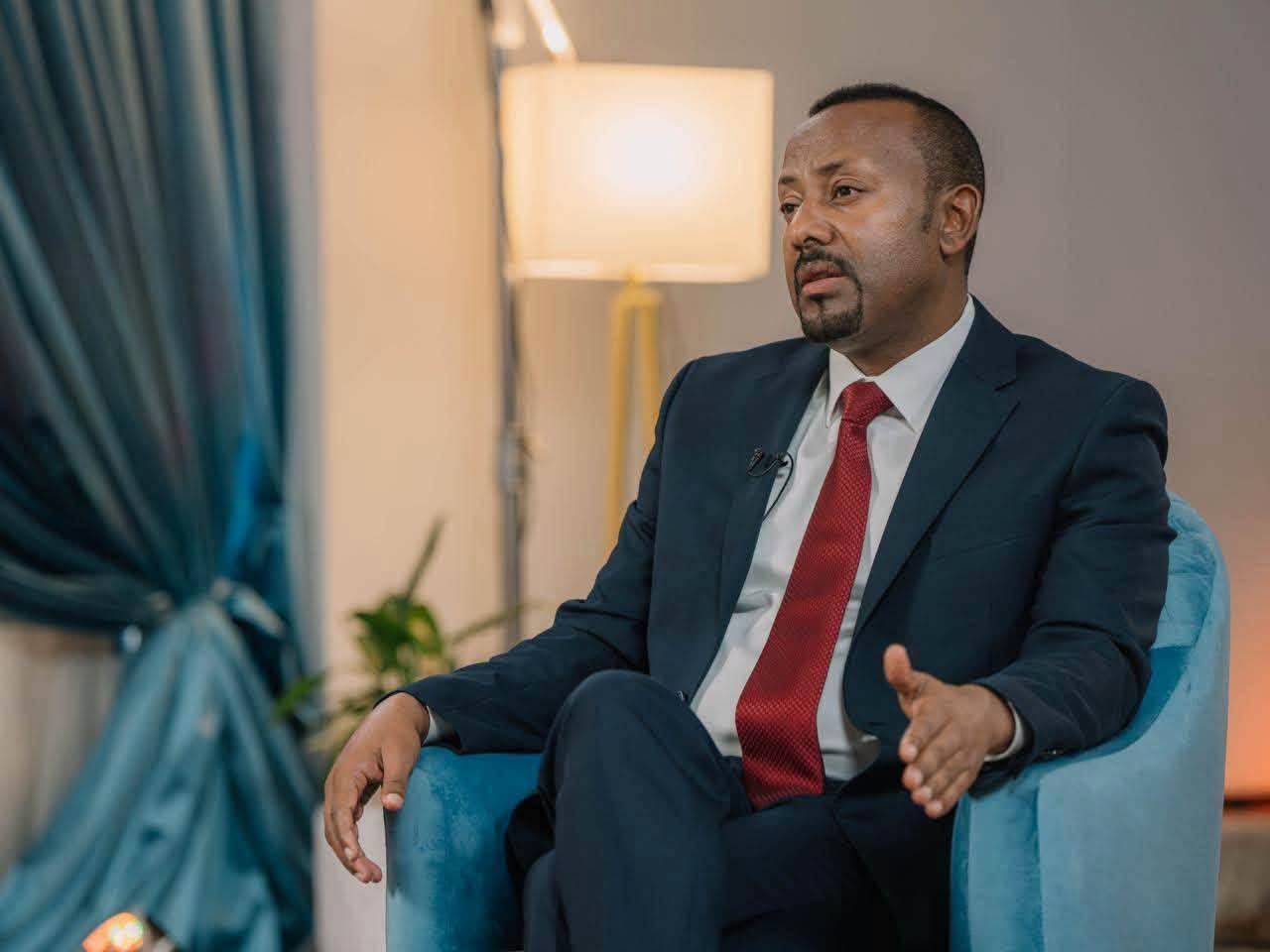
Addis Ababa (AMECO)— In a comprehensive interview with the Amhara Media Corporation (AMECO), the Ethiopian prime minister,Dr. Abiy Ahmed, has outlined a sweeping strategy for the Amhara region, addressing historical grievances through extensive economic development and tourism initiatives.
The approach highlights a significant shift in government focus towards addressing infrastructural deficits that have long plagued the region, framing these efforts as part of a broader national issue. However, the prime minister acknowledged that persistent security challenges threaten to severely limit these efforts, noting, ‘Despite all the problems and obstacles, what has been accomplished in the Amhara region over the last few years is greater, not lesser, than what was done in the previous 20 years.’
A systemic response to historical deficits
Central to the region’s transformation is a massive boost in agricultural production. Addressing the core problem of regional underdevelopment, Abiy pointed to significant investments in modernising the agricultural sector. He noted that work on dams, machinery, fertilisers and the large-scale introduction of water pumps has provided the evidence of this shift. ‘Because of our work on dams, machinery, fertilizers, and introducing water pumps on a large scale, the region’s annual production has more than doubled to over 200 million quintals,’ he stated.
This agricultural push is coupled with substantial industrial and infrastructural expansion. Highlighting the establishment of new industrial hubs as a direct response to past economic neglect, Abiy noted: ‘Before the reform, there was no Bahir Dar industrial park. We built it after the reform. Debre Berhan and Arerti industrial parks were built after the reform.’
Connectivity and essential services have also seen major quantifiable improvements. ‘The total road coverage in the Amhara region was around 2,000 km. It has now more than doubled to 4,500 km,’ he explained. Healthcare access has increased, with the government expanding the number of general hospitals from five to 20, while electricity coverage has grown from about 25% to over 40%.
Insights from heritage and tourism
A key pillar of the region’s future economic strategy relies on harnessing tourism. By capitalising on the area’s historical and natural assets, the government aims to create sustainable economic opportunities that can be scaled for long-term growth. ‘The Gorgora project – a legacy that will transcend generations – was built in the Amhara region,’ Abiy announced.
To attract international visitors and foster regional resilience, the government is prioritising the preservation of its cultural heritage. Abiy noted that the administration has undertaken ‘magnificent restoration work on the aging Fasil Ghebbi palace’ and is working with the French government to restore Lalibela.
The limitations of development amid conflict
Yet these developmental strides face severe limitations due to recent conflicts and an ongoing armed insurgency. The aftermath of the northern war necessitated extensive rehabilitation. Demonstrating the scale of the recovery response, Abiy stated: ‘About 14 billion Birr has been spent on over 1,408 projects in the Amhara region. 459 schools, 210 health facilities, and 358 water facilities have been rebuilt.’
Despite the reconstruction, the prime minister detailed a grim reality on the ground that starkly contrasts with the government’s development goals. He strongly condemned the armed groups currently operating in the region, arguing their actions directly contradict their claims of fighting for the people’s survival.
‘Practically, what we have seen over the past few years is that people are afraid to leave their homes, travelling from Debre Markos to Dejen has become an ordeal, property is being looted, elders and large figures are being killed, teachers are kidnapped and killed, and the Amhara people struggle to educate their children,’ he said.
Looking ahead, Abiy expressed confidence in a 25-year grand strategy stretching to 2050, envisioning a thoroughly modernised state where ‘urbanisation will expand completely’ and ‘food security will no longer be an issue’.
He concluded with a call for unity, warning that internal divisions only serve external adversaries. ‘Everything we see in Ethiopia is the result of the combined drops of blood of every group. The solution is still Medemer,’ he affirmed, adding: ‘The breaking of a fence is only convenient for the hyena; the distancing of hearts only benefits the enemy.’