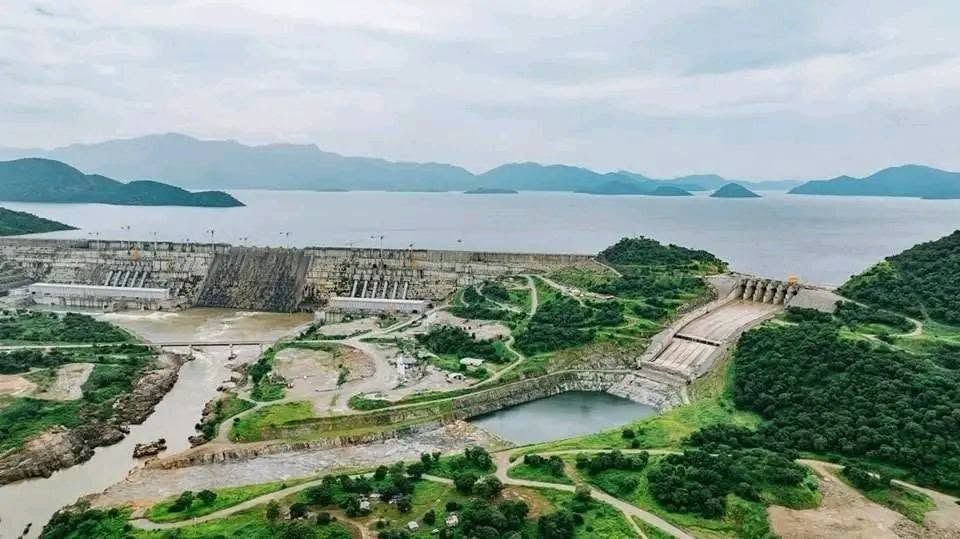
Addis Ababa ( AMECO)- Ethiopian experts have dismissed claims by Egyptian and Sudanese media that the Grand Ethiopian Renaissance Dam (GERD) has reduced downstream Nile water flow, while the experts have accused the down stream country of attempting to destabilise the country by supporting domestic armed groups.
Speaking to the Media, Dr Trusow Assefa, a water resources researcher and member of the International Coalition of Scholars on the GERD, stated that downstream nations continue to receive an equitable share of Nile waters following the mega-dam’s completion. He added that the infrastructure actively protects downstream reservoirs in Egypt and Sudan from destructive seasonal flooding while maintaining consistent flow levels.
The comments follow renewed allegations from Cairo and Khartoum regarding reduced water volumes—a narrative Dr Trusow Assefa described as unfounded propaganda aimed at preserving historical hydro-hegemony dating back to the 13th century.
According to Dr Trusow Assefa, Egypt has continually proposed restrictive agreements designed to limit Ethiopia—which contributes 85% of the Nile’s waters—solely to hydroelectric power generation, while reserving agricultural water use for downstream states.
“In an era where nations cooperate on shared water resources, Egypt’s insistence on sole benefit is unacceptable,” Dr Trusow Assefa said, noting that Ethiopia has repeatedly advocated for joint data-sharing, water monitoring, and regional cooperation.
Beyond the ongoing hydro-diplomatic standoff, state-aligned commentary accompanying Dr Trusow Assefa’s statements alleges that Cairo has pivoted toward internal subversion after failing to block the GERD’s completion. The text claims Egyptian actors are attempting to exploit Ethiopia’s internal vulnerabilities by recruiting and backing armed insurgent groups to spark broader domestic conflict.
Calling on Ethiopian citizens to counter external interference through national unity, peaceful internal dialogue, and economic development, the text emphasized that expanding irrigation and water storage projects remains vital for Ethiopia to break its dependence on rain-fed agriculture.