Addis Ababa, (AMECO) – The head of the Ethiopian National Dialogue Commission (ENDC) has declared that the country’s landmark reconciliation process is progressing smoothly, praising delegates for engaging in open, respectful, and increasingly unified discussions.
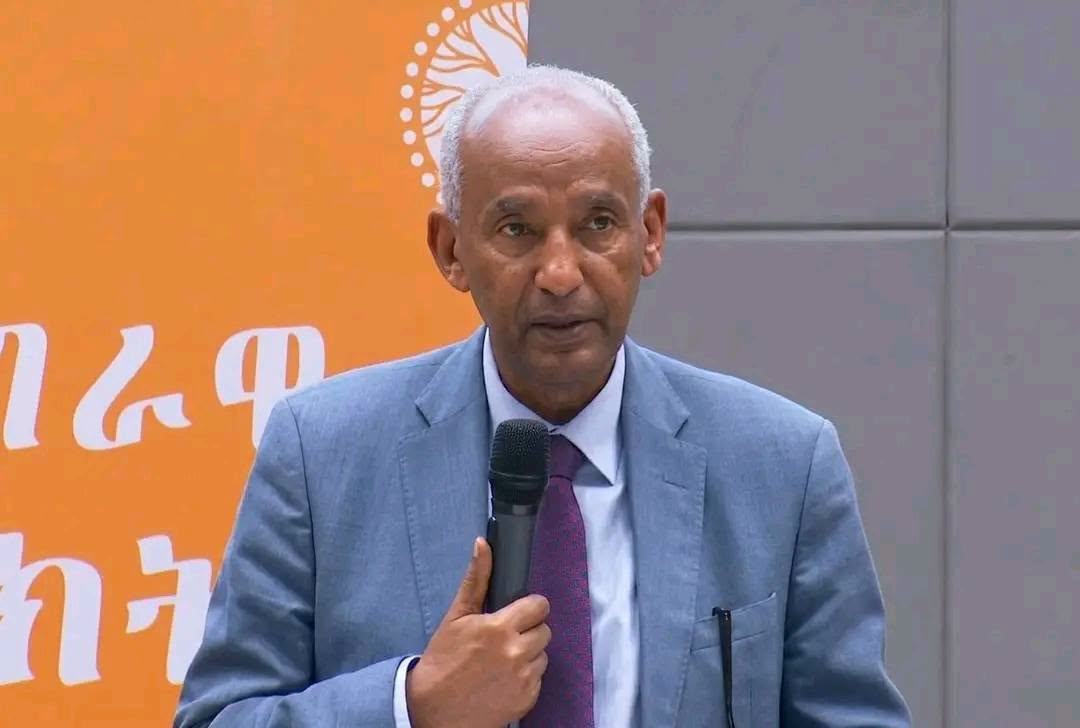
Speaking at a press briefing in Addis Ababa, Professor Mesfin Araya, chief commissioner of the ENDC, rejected widespread rumours that dialogue outcomes have already been secretly decided, reassuring the public that mutual consensus – rather than majority voting – remains the driving force of the initiative.
‘No predetermined outcomes’
Addressing public speculation over the status of the discussions, the chief Commissioner firmly dismissed claims that final decisions had already been reached behind closed doors.
“People are claiming that decisions have already been made, but that is simply untrue,” Prof. Mesfin said. “Nothing is finalised. The ideas presented are gradually drawing closer together.”
He explained that early local consultations had taken place across hundreds of sites nationwide – specifically involving groups of 10 people meeting across 400 locations, and groups of 50 across 80 locations.
The inputs gathered from these 8,000 local participants are now being compiled and transitioned into a 250-member “strategic group” phase. Prof. Mesfin expressed confidence that the strategic phase would wrap up this week, before expanding to a broader 500-member consultative assembly next week.
Equal voice over majority rule
A central tenet of the national dialogue,Prof. Mesfin stressed, is to ensure that smaller or historically marginalised community groups hold an equal footing alongside larger demographic blocs, explicitly ruling out a simple majority rule or “winner-takes-all” dynamic.
“The purpose of the dialogue is to enable smaller community groups to converse on an equal standing with larger ones,” Prof. Mesfin said. “It is not about turning up in large numbers, raising hands, and walking away victorious. The goal is to reach a mutual understanding as equals so that everyone emerges a winner.”
He added that national dialogue differs fundamentally from parliamentary voting, describing it as an integrative process where one faction does not overpower another. Dedicated dispute-resolution teams have also been established to step in whenever procedural disagreements arise.
Preserving history
Highlighting the historic responsibility of the ENDC, Prof. Mesfin noted that all submissions are being meticulously documented to safeguard the historical record and protect the legitimacy of the final recommendations.
He observed a visible shift in national consciousness among delegates as the talks progress, noting that individual positions (“my idea”) are steadily giving way to a shared national vision (“our idea”).
The commission aims to synthesise its final policy recommendations before the close of the current Ethiopian year, with major announcements expected in the upcoming Ethiopian New Year.