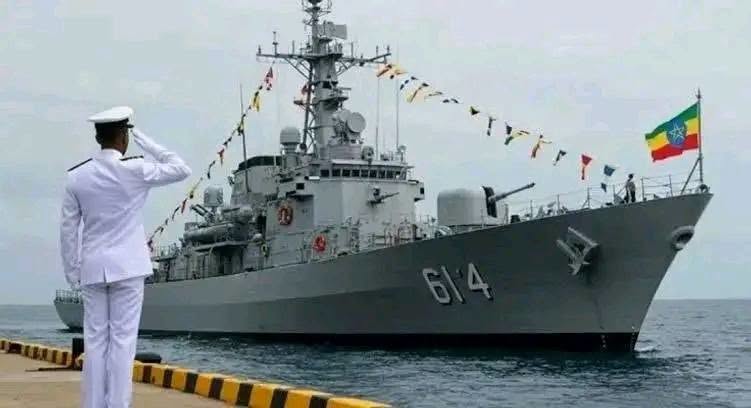
Addis Ababa (AMECO) — The Tigray People’s Liberation Front (TPLF) is facing renewed scrutiny over its historical role in landlocking Ethiopia and its alleged ongoing efforts to undermine national stability in breach of the 2022 Pretoria peace agreement.
According to political analysts and legal scholars, the group continues to engage in destabilising provocations, forming opportunistic alliances with foreign actors and forcibly conscripting youth in Tigray while ignoring calls for peace from local elders and the federal government.
Professor Alemayehu Gebremariam, an international legal scholar, has urged the group to unconditionally implement the Pretoria agreement, engage with the National Dialogue Commission, and allow community elders to foster lasting peace. He also called on Tigrayan intellectuals to counter political propaganda, raise public awareness, and explicitly denounce renewed conflict.
The current critique reflects long-standing grievances over Ethiopia’s loss of direct maritime access following Eritrea’s independence in 1993. Historically, Ethiopia maintained direct access to the Red Sea through ports such as Adulis, Gembeza, Zeila, Massawa, and Assab across successive eras—from the Axumite and Zagwe dynasties to the reigns of Emperor Fasilides and Emperor Haile Selassie I.
However, during its decades leading the ruling coalition, the TPLF formally surrendered these maritime rights. In his book Whose Assab?, Dr Yacob Hailemariam notes that the late Prime Minister Meles Zenawi actively dismissed the strategic necessity of a coastline, claiming that non-use of Assab and Massawa posed no detriment to the nation and that reliance on neighbouring ports was sufficient.
Meles famously argued that pursuing access to Assab was rooted in “monarchical and chauvinistic thinking”, explaining that the issue was deliberately omitted during the Algiers border negotiations due to the availability of alternative trade routes. The TPLF’s endorsement of the Algiers Agreement, its recognition of Eritrean statehood inclusive of its ports during the 1990s transitional government, and its failure to secure Assab at the Ethiopia-Eritrea Boundary Commission are cited by critics as an unforgivable historical scar.
The emotional resonance of this loss remains potent in national memory, as captured in a poem composed by an Ethiopian naval officer when the country’s fleet was disbanded:
“Where is the anchor our navy once dropped?
Where is the sea for which Tekle’s diplomats argued in Paris and New York,
Where Alula’s horses drank, and Ethiopian youth swam—
Where is the sea we swore by in blood?”