The Medemer Responsibility: Harnessing Ethiopia’s Sovereign Mandate to Execute the National Dialogue
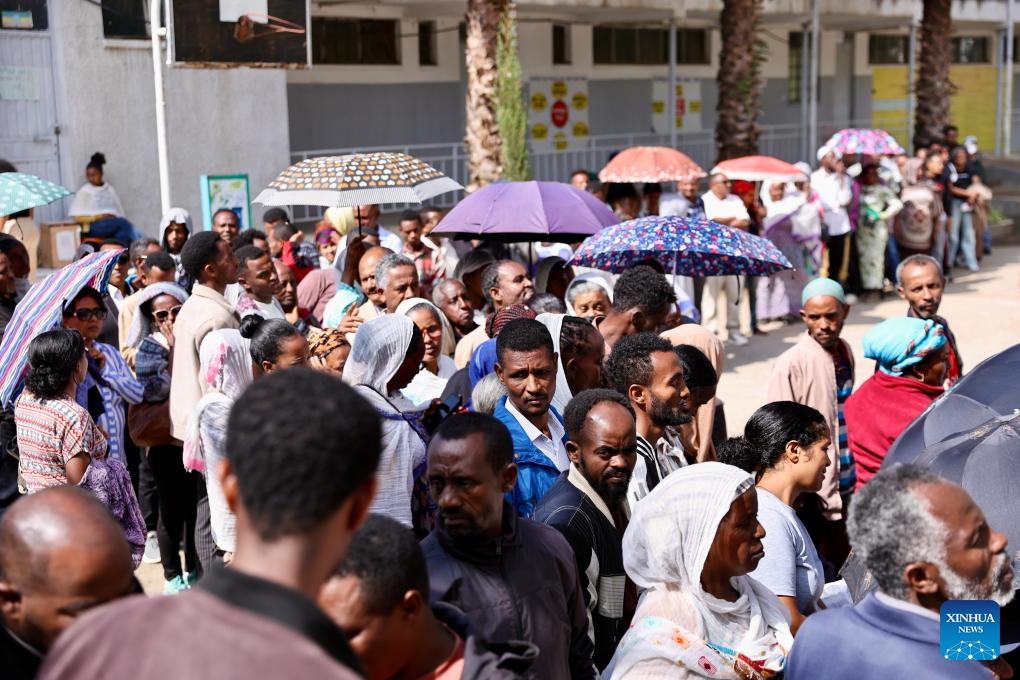
AMECO AFRICA/ ADDIS ABABA— When millions of Ethiopians stood in orderly queues through scorching afternoon heat, torrential downpours, and freezing night chills well past midnight, they were doing far more than casting paper ballots. They were establishing an indelible line in the nation’s political history.
As the Federal Democratic Republic of Ethiopia officially forms its new government today following the 7th General Election, the sovereign voice of the people has resonated across the globe: political power in Ethiopia can only be earned through the sacred trust of the ballot box, completely closing the era of violent intimidation, armed conflict, and unconstitutional shortcuts.
This decisive commitment to constitutional democracy was formally sealed when the National Election Board of Ethiopia (NEBE) certified a landslide victory for the ruling Prosperity Party, which secured an overwhelming majority of 438 seats in the House of Peoples’ Representatives alongside commanding majorities in Regional State Councils nationwide. Announced by NEBE Deputy Chairperson Tesfaye Neway in the presence of President Taye Atske Selassie, NEBE Chairperson Melatwork Hailu, political leaders, and the international diplomatic corps, the electoral outcome grants the incumbent party a clear, mandate-backed authority to form the next federal government and appoint a new cabinet. Yet this electoral triumph is matched by an equally profound national obligation: utilizing this sacred public trust to implement the historic recommendations of the Ethiopian National Dialogue Commission under the guiding philosophy of Medemer.
Defying Doomsday Scenarios with Undaunted Courage
The historic turnout was neither accidental nor easily achieved. In the months preceding the poll, anti-democratic elements and hostile external commentaries aggressively circulated pre-election doomsday scenarios. Extremist groups issued explicit warnings and violent threats, attempting to instill fear and force citizens into staying home.
The reality on the ground shattered these hostile expectations. Demonstrating an unyielding resolve to defend their democratic rights, over 54 million citizens registered to vote, turning the 7th General Election into one of the largest and most enthusiastic electoral exercises in African history. Confronted with intimidation, ordinary Ethiopians responded with courage, asserting their right to determine the nation’s future through peaceful participation.
Discipline at the Polls and Observer Verification
On Election Day, polling stations across all corners of the country witnessed an extraordinary spectacle of civic maturity. Elders, youth, women, and persons with disabilities lined up side by side, exhibiting patience and endurance that earned international acclaim.
Official reports from the African Union (AU) Joint Observer Mission and the Intergovernmental Authority on Development (IGAD) Election Observation Mission, complemented by extensive reporting from the Ethiopian News Agency (ENA), commended the peaceful, orderly, and transparent conduct of the election. Observers emphasized that the sheer volume of public participation reflected deep-seated public trust in Ethiopia’s constitutional institutions and electoral processes.
Beyond the decisive 438-seat majority won by the Prosperity Party, the election demonstrated pluralistic participation, with opposition parties such as EZEMA securing 13 seats, NAMA winning 6 seats, and Medrek taking 3 seats, alongside independent representatives and regional council winners. This diverse legislative composition reflects a mature democratic forum where varied political voices can contribute constructively to national governance.
National Dialogue Enters a New Chapter: From Consultation to Implementation
As the nation enters this new political phase, Ethiopia’s National Dialogue process has concurrently transitioned from broad deliberation to concrete institutional implementation. Established under Proclamation No. 1265/2021 to address longstanding historical grievances through an inclusive, peaceful process, the Ethiopian National Dialogue Commission (ENDC) has reached a monumental milestone.
In a landmark ceremony attended and overseen by Prime Minister Abiy Ahmed, ENDC Chief Commissioner Professor Mesfin Araya formally handed over the commission’s consolidated agenda items and recommendations to the House of Peoples’ Representatives, the federal government, and regional state governments. This handover marked the culmination of an exhaustive nationwide consultation that spanned all 12 regional states and the two city administrations of Addis Ababa and Dire Dawa.
Through these consultations, the commission gathered over 2,000 citizen agenda submissions, systematically harmonizing them into eight core thematic pillars covering nation-building, state structure, federal city governance, religious affairs, institutional strength, socio-economic policy, anti-corruption, and sustainable peacebuilding. As Professor Mesfin Araya observed, the process proved to the world that Ethiopians possess the wisdom and political maturity to engage in civilized dialogue, bridge deep differences, and build consensus around shared national goals.
The Medemer Responsibility: Executive Action on Consensus
The primary challenge facing the incoming administration is no longer reaching consensus—it is translating that consensus into swift, meaningful institutional action. This pivotal executive phase aligns with the successful establishment of newly elected regional and city councils across the country, which have already completed government formations and elected their chief administrators, laying a robust operational foundation.
Anchored in the philosophy of Medemer—synergy, national reconciliation, and shared prosperity—the newly formed government under Prime Minister Abiy Ahmed holds a unique historic duty to execute these consensus-driven recommendations by:
Institutionalizing Recommendations into Law: Translating the ENDC’s harmonized recommendations across all eight thematic pillars into binding legislative frameworks, executive policies, and development programs.
Fortifying Independent Institutions: Strengthening the judiciary, electoral mechanisms, and civil service infrastructure to uphold constitutional rule of law and safeguard democratic rights.
Harmonizing Federal-Regional Synergy: Partnering directly with newly elected regional chief administrators and state councils to ensure uniform, equitable execution of National Dialogue outcomes across every region and city administration.
The voters of Ethiopia have fulfilled their civic duty with heroic patience and unwavering resolve. Concurrently, the National Dialogue Commission has provided a clear, consensus-backed roadmap for structural renewal. Today, as the new Medemer government assumes office, it embarks on fulfilling its solemn contract with the nation: translating sovereign votes into lasting peace, institutional integrity, and shared prosperity.