Addis Ababa (AMECO) – Ethiopia’s traditional elder-led mediation system, Shimigilina, represents a vital national binding value capable of building strong families and communities beyond ethnic and religious lines, the Ministry of Peace has emphasised, highlighting the practice as an essential alternative to political force and armed confrontation.
The assertion that political grievances cannot be resolved through weaponry or coercion—which win bodies rather than hearts—is supported by academic research into customary justice systems. A study conducted by Elias Wolansa Habteyes at Addis Ababa University’s Department of Amharic Language, Literature and Folklore, focusing on the Halaba ethnic group, confirmed that traditional conflict resolution mechanisms command widespread social legitimacy. The study demonstrated that these traditional processes act rapidly to unearth concealed facts, prevent retaliatory violence, and establish an enduring peace free of lingering grudges.
Unlike formal judicial courts, which inevitably produce a winner and a loser, the Shimigilina process seeks mutual resolution, ensuring both parties emerge as victors for peace. Customary mediators intervene swiftly to prevent disputes from escalating into bloodshed. By examining whether harm was committed intentionally or accidentally, elders apply proportionate traditional penalties tailored to the severity of the offense.
The essential role of truth and justice within the process was documented by the prominent academic Professor Mesfin Woldemariam in his book Shimagle and Shimigilina (Elders and Mediation). True elders, Mesfin noted, act as pillars of community stability who speak truth without yielding to power. By holding wrongdoers accountable and guiding them to acknowledge their offenses, elders facilitate a genuine, lasting reconciliation of hearts under the principle that “truth does not die in the presence of an elder.”
Rooted in oral wisdom and poetic aphorisms, the philosophy of Shimigilina acknowledges human friction while rejecting perpetual enmity. Traditional proverbs such as “water that does not flow does not collide” teach that while co-existence naturally generates conflict, holding grudges inflicts deep societal wounds. Proceedings avoid shouting and intimidation; instead, elders leverage their moral authority and gentle speech—invoking the saying, “with a gentle tongue, bones are broken”—to disarm pride and soften hardened hearts.
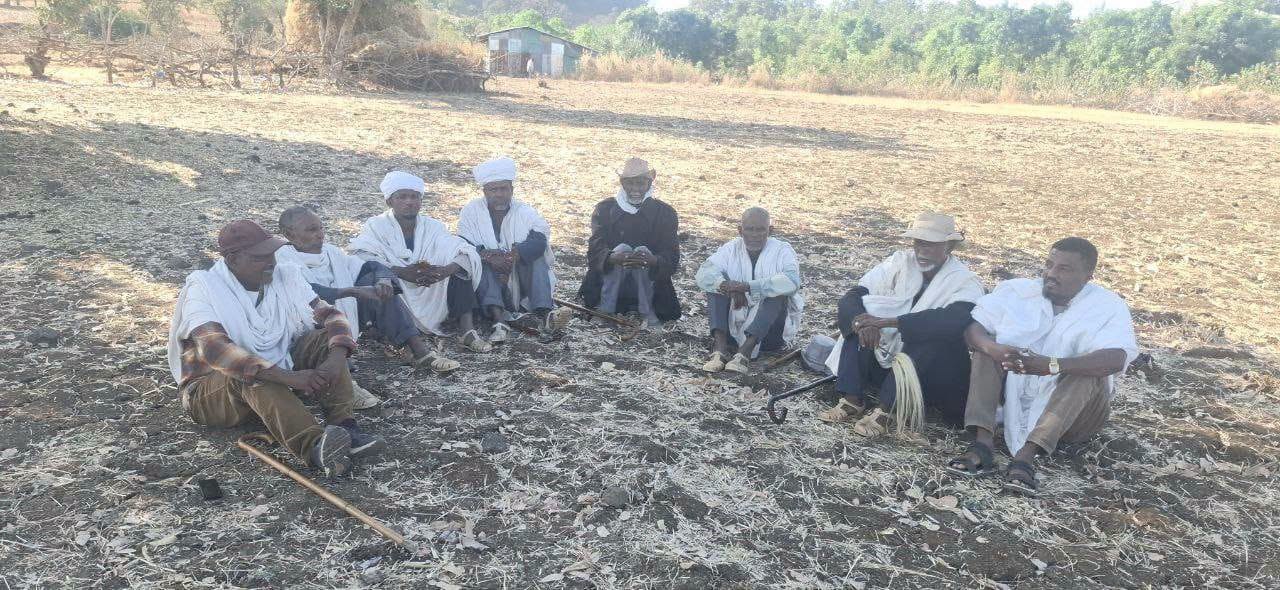
Conducted traditionally under the protective shade of giant warka (sycomore fig) trees, the mediation process incorporates symbolic rituals of hope and renewal. Elders hold fresh green grass during the proceedings, extending blessings of “may your path be green” upon the reconciled parties. By substituting vengeance with mutual forgiveness, the custom repairs severed relationships between kin and community members, offering a blueprint for national cohesion where conventional zero-sum approaches fail.