How Ethiopia’s national dialogue is navigating deep divisions
As 4,000 delegates gather in Addis Ababa, the chief commissioner reveals how a structured, three-phase model is handling fierce political debate.
Addis Ababa,( AMECO) — As Ethiopia seeks to address deep-seated national divisions through broad-based dialogue, its National Dialogue Commission reported tangible progress on Saturday in managing large-scale negotiations through a structured reconciliation model.
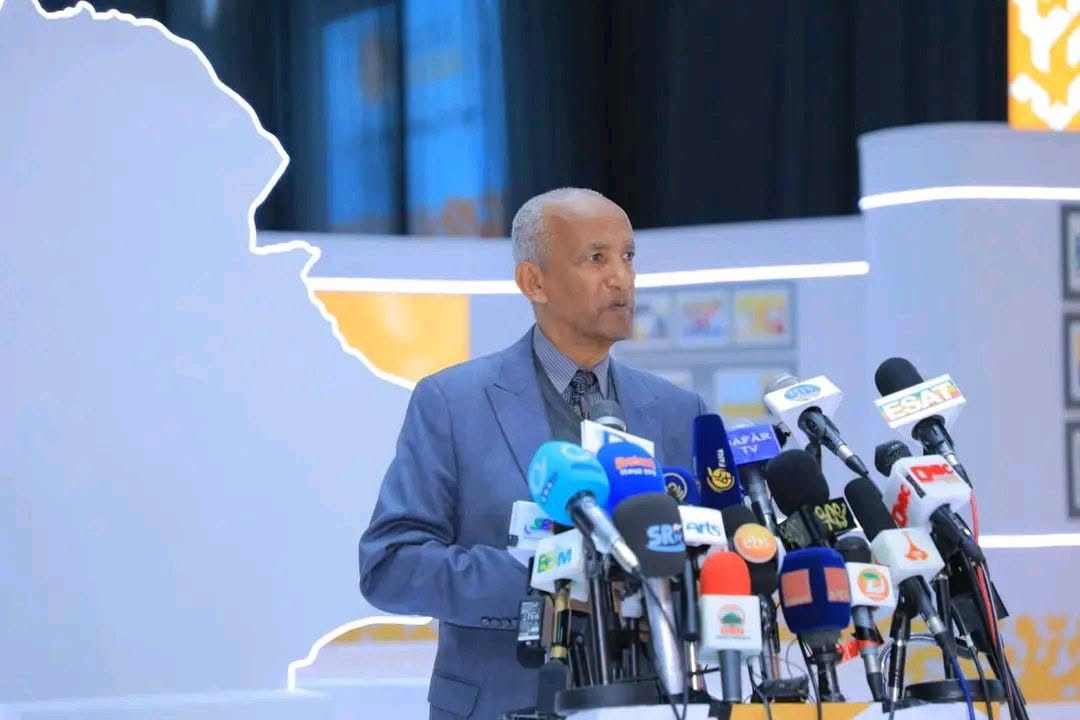
Briefing reporters 10 days into the assembly – which began on 16 July 2026 – the chief commissioner, Prof Mesfin Araya, stated that more than 4,000 participants gathered in a single hall are engaging in structured deliberations grounded in mutual respect and active listening.
The mechanism: from 200,000 submissions to eight agendas
To keep a massive, multi-faction gathering manageable, the commission implemented an internationally benchmarked methodology:
-
Grassroots synthesis: More than 200,000 public submissions gathered nationwide were consolidated into eight core national agenda items.
-
Neutral moderation: Academic experts and neutral facilitators provide technical data inputs while remaining strictly bound by neutrality protocols to prevent personal or partisan bias.
-
Three-phase progression: A phased workflow designed to move delegates from initial working group orientations, through structured debate (phase one), into narrowing ideological gaps (phase two), and ultimately towards national consensus (phase three).
‘Differing perspectives and heated arguments are not signs of failure – they are an essential, expected component of genuine dialogue,’ Prof Mesfin said. ‘The process is engineered to gradually bring contrasting views together.’
Evidence of progress
During the initial 10-day period, delegates transitioned from reviewing procedural rules and group introductions to active, agenda-based working sessions. Commission leadership noted that despite intense debate, delegates have maintained civility and adhered to group protocols – demonstrating the practical viability of bringing thousands of diverse local actors into a single deliberative space.
Limitations and ongoing challenges
While praising the overall progress, Prof Mesfin acknowledged the continuous learning curve involved in the process, noting that minor friction and emotional disagreements remain inevitable.
‘We must keep in mind that as a society, we are still actively learning the discipline of inclusive national dialogue,’ he said, emphasising that long-term success depends on sustained patience and trust in the structured process.