Addis Ababa, (AMECO) — American state and commercial financing institutions are evaluating investment packages for Ethiopia’s planned multi-billion-dollar international airport, signaling a potential shift toward greater U.S. capital participation in Horn of Africa infrastructure.
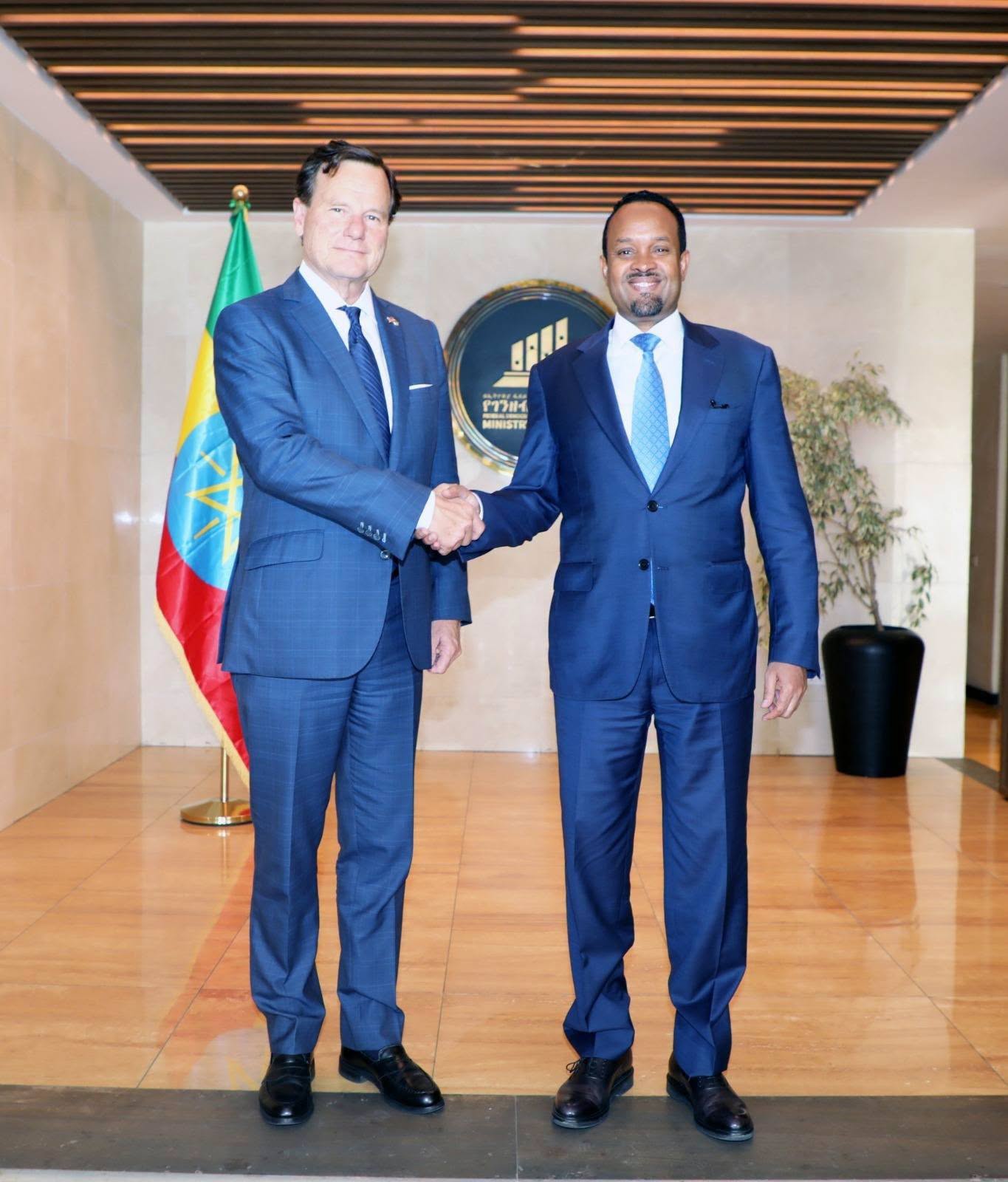
The strategic airport development topped the agenda during bilateral talks in Addis Ababa between Ethiopian Minister of Finance Ahmed Shide and Mark Mitchell, Deputy Assistant Secretary for Middle East and Africa at the U.S. Department of Commerce.
Strategic Capital for Horn Infrastructure
Washington’s interest in backing the project — designed to replace the congested Bole International Airport with a mega-hub in Abusera, near Bishoftu — marks one of the most significant potential American entries into Ethiopian state-led development in recent years.
According to Ministry of Finance briefings, discussions focused on mobilizing U.S. institutional lenders and private sector contractors across three priority areas:
-
Infrastructure Debt & Equity: Engaging American development finance entities to support early-stage construction funding for the mega-airport.
-
Corporate Alliances: Establishing direct business-to-business (B2B) channels between U.S. logistics firms and domestic operators.
-
Regulatory Alignment: Streamlining foreign exchange and profit-repatriation frameworks to reassure institutional investors.
Leveraging Economic Liberalisation
The bilateral push follows Ethiopia’s aggressive macroeconomic overhaul, which included floating the birr and opening previously restricted state monopolies — such as telecommunications and retail banking — to foreign capital.
Briefing the U.S. delegation, Finance Minister Ahmed Shide emphasized that structural reforms are specifically tailored to mitigate currency risks and reduce administrative friction for foreign direct investment.
“Sustained economic adjustments have established a more predictable framework for international investors,” Ahmed stated, emphasizing Ethiopia’s aim to transition toward a private-sector-led growth model.
Washington Welcomes Market Shifts
In turn, Deputy Assistant Secretary Mark Mitchell commended Addis Ababa’s progress in liberalizing key economic sectors, affirming the U.S. Department of Commerce’s intent to lower entry barriers for American businesses.
“The Department of Commerce remains committed to expanding commercial partnerships and supporting increased engagement by U.S. companies in the Ethiopian market,” Mitchell noted.
Both sides agreed to establish a structured bilateral follow-up mechanism to convert preliminary infrastructure interest into formal trade and investment commitments.