AMECO AFRICA / ADDIS ABABA
O5 October,2026— The choice facing the Horn of Africa is stark. While hostile alignments cling to zero-sum proxy warfare and historical containment, Ethiopia stands ready to lead the region toward a future defined by infrastructure, energy, peace, and shared prosperity.
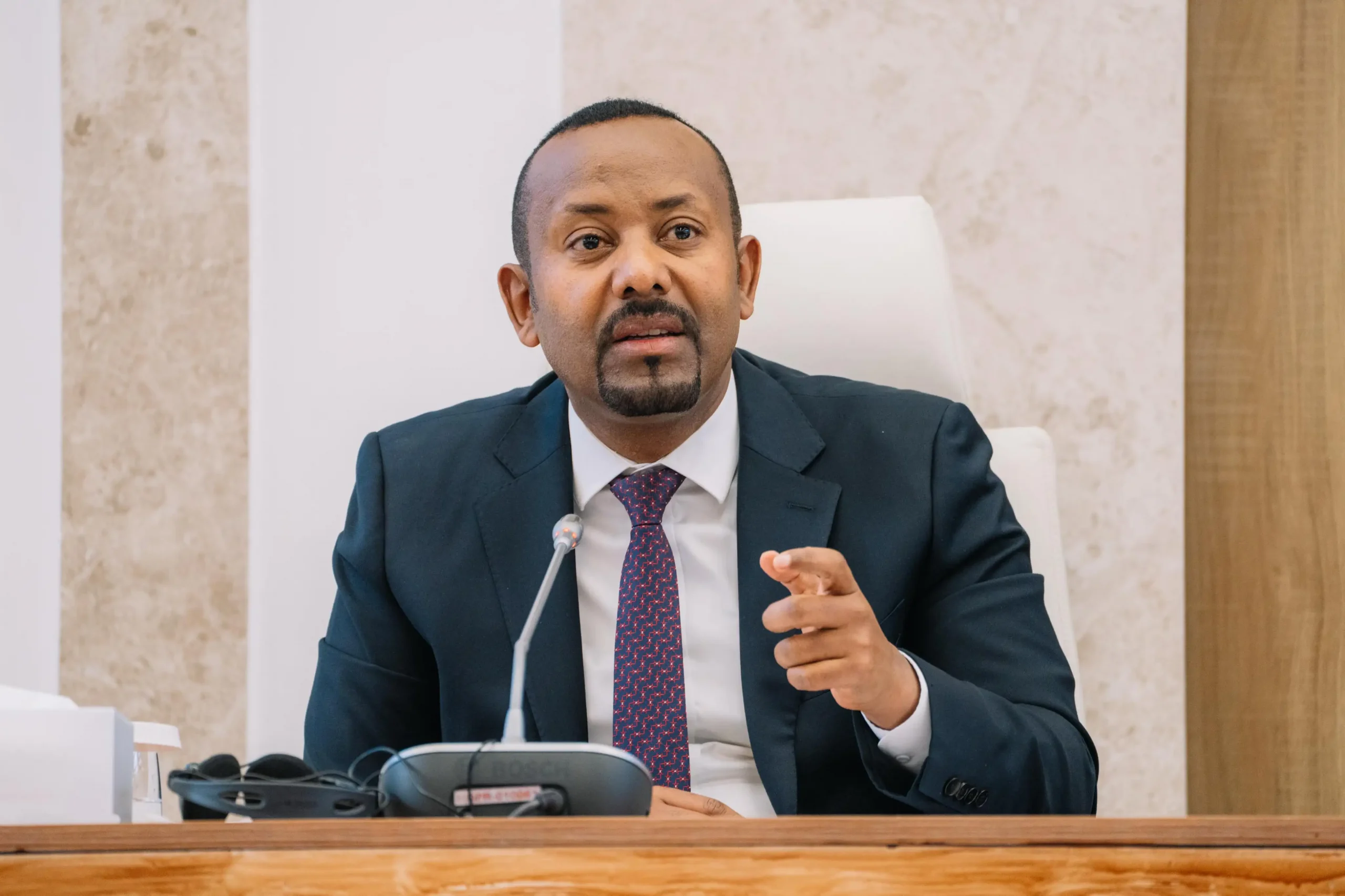
As Ethiopia advances its national vision of state-building, economic transformation, and regional connectivity, its sovereign ambitions face a complex and coordinated campaign of external subversion. Addressing the House of Peoples’ Representatives, Prime Minister Abiy Ahmed delivered a strategic geopolitical diagnosis of the security threats converging along Ethiopia’s northern and eastern flanks. Moving past standard diplomatic phrasing, the Prime Minister deployed a striking allegory to expose the mechanics of foreign-sponsored proxy warfare: the allegory of the axe.
In the Prime Minister’s assessment, the resurgence of destabilization in northern Ethiopia is not an isolated domestic friction, but a single weapon assembled and wielded by a hostile tripartite coalition designed to weaken Ethiopia’s territorial integrity, impede the Grand Ethiopian Renaissance Dam (GERD), and neutralize its legitimate pursuit of Red Sea maritime access.
Deconstructing the “Axe”: The Anatomy of the Triple Alliance
Prime Minister Abiy’s diagnostic lays bare how three distinct regional actors align their strategic interests to execute a multi-layered campaign against the Ethiopian state:
1. The Iron Blade: Hardline Factions
At the tip of the weapon lies the metal head: hardline elements within the Tigray People’s Liberation Front (TPLF) who actively resist the spirit of the 2022 Pretoria Cessation of Hostilities Agreement. Stripped of an independent national vision or constructive domestic program, the blade lacks momentum on its own. It functions primarily as an impact tool—forcibly recruiting regional youth, exploiting governance vacuums, and keeping northern Ethiopia in a state of perpetual friction to execute disruption on command.
2. The Wooden Handle: The Eritrean Regime
A metal blade cannot strike effectively without operational leverage. President Isaias Afwerki’s regime in Asmara functions as the wooden handle that directs the blade. Shifting from its historic enmity with Mekelle, Asmara provides tactical alignment, logistical conduits, and safe havens to anti-federal factions. Driven by a desire to prevent a strong, unified Ethiopia from achieving sovereign Red Sea port access, Asmara supplies the physical leverage needed to swing internal instability toward Addis Ababa.
3. The Hand Wielding the Weapon: Cairo’s Containment Doctrine
At the top of the chain stands Egypt, acting as the strategic mind holding the handle. Driven by existential anxieties over Nile water security and Ethiopia’s rising economic stature, Cairo operates as the woodcutter. By orchestrating defense pacts, supplying arms across the Horn, and funding regional proxy networks, Egypt aims to chop away at Ethiopian sovereignty without directly deploying its own infantry on Ethiopian soil.
The Encirclement Perimeter: From Proxies to Formal Security Axes
The “Axe” operates within a broader, state-level containment perimeter assembled by Cairo and Asmara across East Africa:
The Three-Nation Axis: Spearheaded by Cairo, a diplomatic and security coalition uniting Egypt, Eritrea, and Sudan was formalized at summits in El-Alamein to establish a containment ring around Ethiopia, explicitly targeting transboundary water development and regional economic partnerships.
Militarization on Ethiopia’s Eastern Flank: Capitalizing on friction over Ethiopia’s Memorandum of Understanding with Somaliland, Cairo signed a bilateral defense accord with Mogadishu. Egypt committed up to 15,000 troops under African Union (AUSSOM) and bilateral frameworks, delivering heavy artillery, arms, and logistics directly to Ethiopia’s eastern border.
Exploiting the Sudanese Conflict: In Sudan, Cairo has aligned firmly with General Abdel Fattah al-Burhan’s Sudanese Armed Forces (SAF), providing diplomatic, logistical, and military backing to secure a compliant regime in Khartoum aligned with Egyptian positions on Nile governance.
Asmara’s Legacy of Regional Subversion: This alignment builds on Eritrea’s long-standing security doctrine of state-directed destabilization. From the 1995 Hanish Islands clash with Yemen, the 1998–2000 border war with Ethiopia, and the 2008 Ras Doumeira conflict with Djibouti, to hosting armed opposition movements (including the OLF, ONLF, and Ginbot 7) and backing Somalian insurgents that triggered UN Security Council Resolution 1907 sanctions in 2009, Asmara has consistently functioned as a major source of volatility in the Horn.
The Ethiopian Contrast: Regional Integration Through Infrastructure and Security
While Cairo and Asmara invest in proxy networks, defense pacts, and containment strategies, Ethiopia counters with a transformative doctrine centered on economic interdependence, shared infrastructure, and mutual security under the philosophy of Medemer.
Where foreign powers deploy tools of disruption, Ethiopia builds pillars of regional unity:
Energy Diplomacy & Sustainable Power:The Grand Ethiopian Renaissance Dam (GERD) is an engine of green growth for all of East Africa. Ethiopia already exports affordable, renewable hydroelectric power to Kenya, Djibouti, Sudan, and Tanzania, driving regional industrialization and lowering reliance on fossil fuels.
Cross-Border Infrastructure & Logistics: Ethiopia continues to expand transport corridors, telecom interconnectivity, and port diversification efforts, transforming the Horn from a fragmented zone of conflict into an integrated economic marketplace.
Anchoring Horn Security:The Ethiopian National Defense Force (ENDF) remains the indispensable backbone of counter-terrorism and peacekeeping operations in Somalia and South Sudan, risking lives to safeguard regional stability while external powers funnel weapons into fragile borderlands.
Win-Win Maritime Cooperation: Ethiopia’s push for diversified port outlets and Red Sea access is anchored in commercial equity, shared equity investments, and long-term economic partnerships—offering coastal neighbors sustainable revenue in exchange for access to one of Africa’s largest domestic markets.
Sovereign Resolve and the Path Forward
By exposing the mechanics of the “Axe” on the floor of Parliament, Prime Minister Abiy Ahmed delivered an unambiguous message to both domestic actors and foreign capitals: Ethiopia views local proxy insurgencies and foreign containment doctrines as a single, unified national security threat.
To the people of Tigray and the broader nation, the federal government offers inclusive national dialogue and shared development, urging citizens not to let regional youth be weaponized as disposable “iron” for foreign sponsors. Backed by a strong domestic mandate and resilient economic foundations, Ethiopia remains unshakeable in defending its water rights, securing its borders, and pursuing lawful sea access.
The choice facing the Horn of Africa is stark. While hostile alignments cling to zero-sum proxy warfare and historical containment, Ethiopia stands ready to lead the region toward a future defined by infrastructure, energy, peace, and shared prosperity.