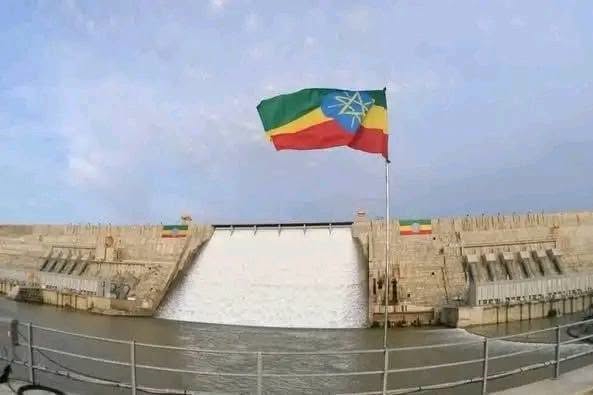
Addis Ababa (AMECO)– The vast artificial lake formed by the Grand Ethiopian Renaissance Dam (GERD) has yielded nearly 11,000 tonnes of fish in the past fiscal year, turning the hydroelectric project into a major hub for regional food security and youth employment.
According to regional data from Benishangul-Gumuz, 10,799 tonnes of commercial fish were harvested from Lake Nigat (“Lake Dawn”), the reservoir created by the damming of the Blue Nile. Local communities around the perimeter have formed youth-led cooperatives, establishing managed fisheries that provide a steady source of income while preserving the surrounding aquatic ecosystem.
Fisheries experts working on the project say production is expected to move beyond domestic supply to export markets in neighboring countries, securing much-needed foreign exchange. The long-term vision aims to scale up operations to transform Lake Nigat into Africa’s largest freshwater fish production centre.
The rapid development of aquaculture on Lake Nigat marks a strategic pivot for Ethiopia, expanding the multi-billion-dollar GERD project from an industrial power-generation station into a dynamic hydro-economic hub.
For generations, the Blue Nile (known locally as Abay) flowed out of the Ethiopian highlands, carrying away millions of tonnes of fertile topsoil and mineral wealth downstream without contributing to local electricity or food production. While downstream nations developed extensive water infrastructure—such as Egypt’s Aswan High Dam and Lake Nasser, which produces 25,000 to 30,000 tonnes of fish annually and employs over 10,000 young fishers, according to Egypt’s National Digital Library—Ethiopia remained unable to harness its primary water resource.
With the impoundment of Lake Nigat, local authorities are replicating and adapting successful freshwater management models to address rural poverty. Officials believe that by tapping into the full potential of its natural resources, the country is taking concrete steps toward long-term economic self-reliance and food security.