AMECO AFRICA
A $660m petroleum pipeline linking Djibouti’s coast to the Ethiopian border is set to reshape the economic geography of the Horn of Africa, tackling decades of logistical bottlenecks along one of the continent’s most vital trade corridors.
According to reports by the Ethiopian News Agency (ENA), the landmark 120-kilometre infrastructure project—developed jointly by Ethiopian Investment Holdings (EIH), the government of Djibouti, and Nigeria’s Dangote Group—will connect Damerjog in Djibouti with Dewele in eastern Ethiopia. By cutting fuel transit times from five days to just 24 hours and establishing a 1.25 million-cubic-metre storage network, the venture aims to turn regional integration from a political ambition into a commercial reality.
At the core of the project is a massive expansion in fuel storage capacity designed to insulate Ethiopia from global supply shocks. Facilities will hold 375,000 cubic metres of refined petroleum at Damerjog and 875,000 cubic metres at Dewele.
Dr Brook Taye, chief executive of Ethiopian Investment Holdings, emphasised the strategic depth the facility provides. “The Dewele depot plays a dual role,” Brook said. “First, it gives Ethiopia a major strategic reserve within our borders capable of sustaining the country for months. Second, because it connects directly with our railway line, fuel distribution will occur via rail in addition to trucks, significantly cutting transit friction and overall transport costs.”
The project relies on public-private synergy, leveraging state assets alongside capital and management expertise from Aliko Dangote, Africa’s wealthiest industrialist. Dangote’s intervention reflects a broader strategy of addressing critical infrastructure gaps to unlock industrial potential across the continent.
Djibouti currently serves as landlocked Ethiopia’s principal maritime gateway, handling the vast majority of its international trade. The pipeline deepens this economic interdependence while shifting fuel transport off overloaded road networks and onto a combined pipeline and rail grid.
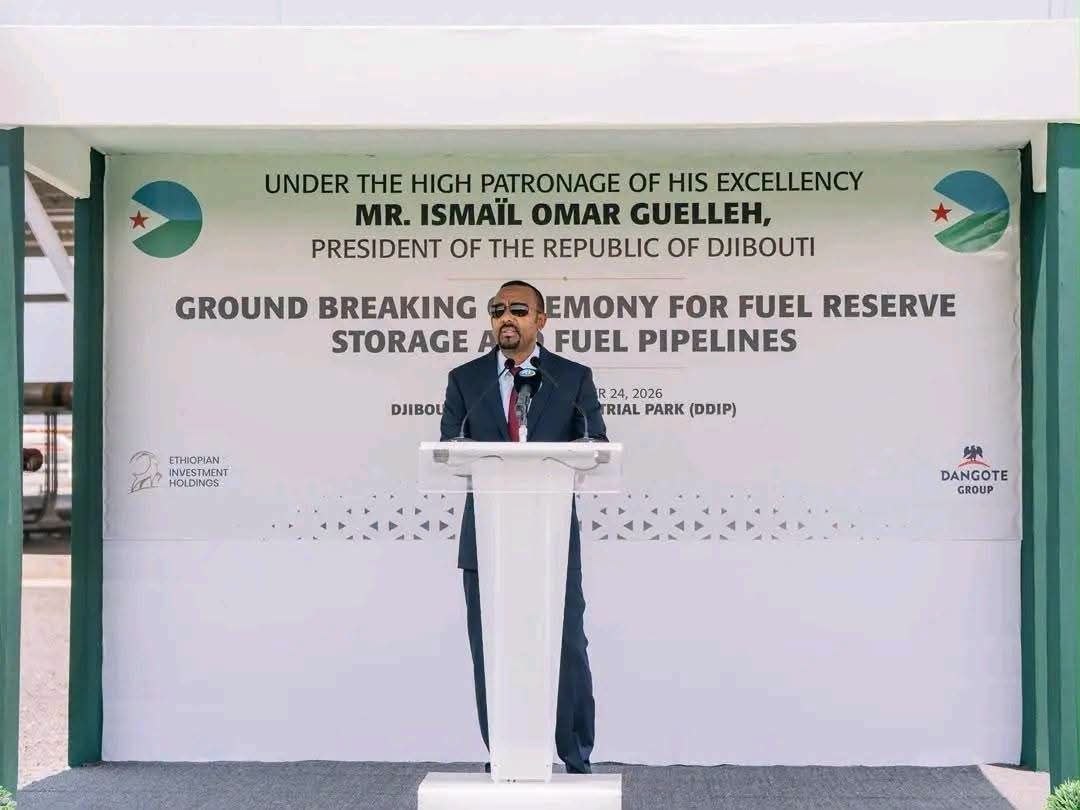
Speaking at the project inauguration, President Ismail Omar Guelleh of Djibouti framed the pipeline as a cornerstone for long-term regional stability. “We are committed to working together with our Ethiopian counterparts to create a more integrated and connected economy,” Guelleh said. “This pipeline will not only reduce the journey time for fuel, but it will also create new opportunities for trade, investment, and economic growth. We believe that this project will be a game-changer for our region.”
While the project promises to lower import costs and improve fuel security, regional leadership stressed that rapid execution remains critical. Construction is scheduled for completion within two years
Prime Minister Abiy Ahmed of Ethiopia underscored the imperative to deliver the project on schedule. “Announcements create expectations; delivery earns trust,” Abiy said. “We must now turn this commitment into a working pipeline.”