
AMECO AFRICA / ADDIS ABABA
October 2026 — In a rapidly evolving global digital landscape, traditional administrative systems are no longer enough to meet the demands of modern governance. To bridge bureaucratic gaps and accelerate national development, Ethiopia is leveraging cutting-edge technology directly at the core of public sector administration.
Under the direct guidance of Prime Minister Abiy Ahmed Ali, the establishment of specialized state entities like the Ethiopian Artificial Intelligence Institute (EAII) forms the centerpiece of a strategic vision: to leapfrog legacy structural bottlenecks by establishing a state-led, data-driven technological ecosystem.
A High-Tech Engine for Public Sector Capacity
Officially inaugurated as an autonomous state body, the EAII serves as the nation’s hub for artificial intelligence research, data governance, and specialized technological development. Rather than viewing emerging technologies as a distant future, the Ethiopian government has integrated AI as an immediate, essential tool for national transformation.
Highlighting the irreplaceable role of advanced technology across the public sector, Prime Minister Abiy Ahmed has stated that artificial intelligence plays a fundamental role in modernizing key socio-economic pillars. Emphasizing the strategic necessity of technology in governance, the Prime Minister noted:
“AI has an irreplaceable role in law enforcement, agriculture, industry, health, service, and trade… it has extremely big benefits for the country in any sector.”
From optimizing agricultural yields through data analytics to automating public service workflows and enhancing health diagnostics, the institute is building localized data infrastructure tailored to solving home-grown administrative challenges.
Data Sovereignty and Africa’s Digital Competitiveness
A central pillar of the official narrative surrounding the EAII is the imperative for national digital sovereignty and global competitiveness. By building in-house technological research infrastructure, the government aims to ensure that Ethiopia actively shapes digital innovations rather than remaining a passive consumer of foreign systems.
Underlining the nation’s broader technological ambition, Prime Minister Abiy Ahmed stressed the necessity for active participation in the global innovation race:
“Africa must actively participate in the global technology race to ensure that we are competitive players in the evolving digital landscape.”
Central to this effort is treating data as a vital national asset. Government policy framework views data security as paramount to national strength, asserting that “protecting your data is protecting your gold, protecting your money”. Institutional frameworks like the EAII ensure that national data assets are transformed into centralized public goods—fueling digital ID networks, public health algorithms, and administrative automation.
Institutional Alignment for Sustainable Development
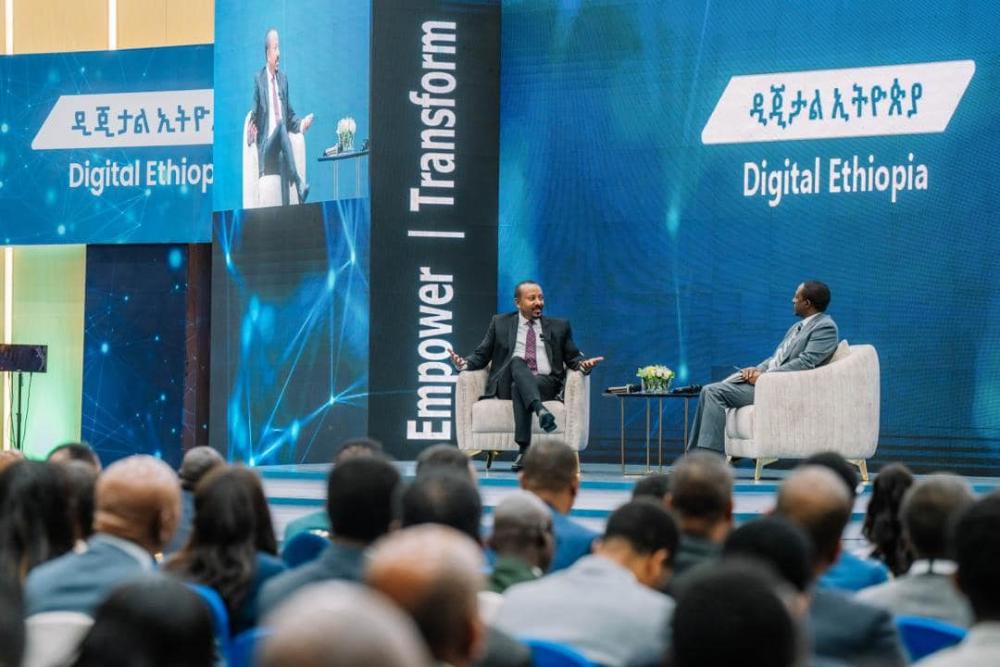
The creation of dedicated research institutions aligns directly with the government’s broader Digital Ethiopia 2025 strategy, designed to integrate technology into every sector of the economy.
International policy analyses and sectoral studies recognize the potential of this state-led model. Scholars and technological research observers note that by centralizing AI governance, optimizing resource allocation, and building digital capabilities, institutions like the EAII can significantly lower operational costs and “strengthen Ethiopia’s health system and make it more responsive and resilient” alongside other critical public services.
Through strategic investments in advanced research infrastructure, localized language models, and high-tech talent, Ethiopia is demonstrating how targeted statecraft can build resilient, future-ready institutions. By positioning technology at the heart of public administration, the nation is establishing a strong blueprint for digital sovereignty and administrative modernization across the region.