Addis Ababa (AMECO) — For members of the Ethiopian diaspora returning to their homeland, vacation time has historically been double-edged. Short visits meant to reconnect with family and explore investment opportunities were often swallowed up by the grueling realities of public administration: navigating Addis Ababa’s heavy traffic, waiting in endless multi-agency queues, and battling decentralized, prone-to-corruption administrative processes just to renew a passport or authenticate a property deed.
Today, a structural response to this systemic bottleneck is quietly reshaping how government services are delivered. Through the Federal Democratic Republic of Ethiopia (FDRE) Mesob One-Stop Center, the government is testing a unified model designed to streamline bureaucracy, curb extortion, and compress weeks of paperwork into hours.
By centralizing more than 240 federal government services into a single physical and digital ecosystem, the initiative offers a compelling case study in public sector innovation—with returning citizens serving as primary beneficiaries.
Centralizing the Maze: How the Model Works
Rather than requiring citizens to traverse the capital to visit disparate ministries, the Mesob model gathers key state apparatuses under one roof. The facility integrates critical administrative bodies, including the Immigration and Citizenship Service, the Ethiopian Investment Commission, the Ministry of Labour and Skills, the Ministry of Foreign Affairs, and Document Authentication and Registration Services (DARS).
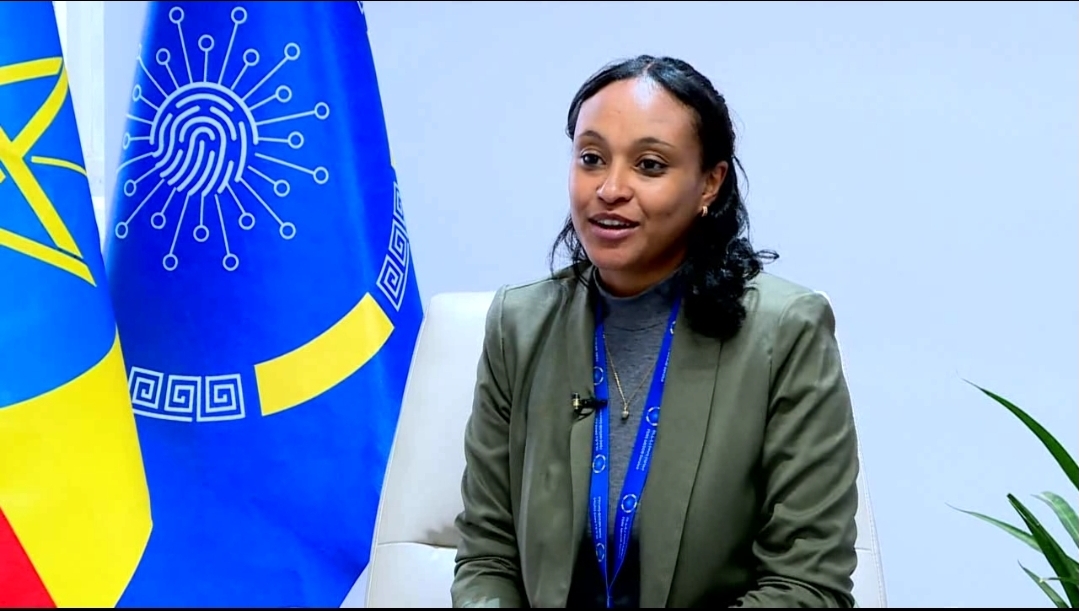
“The services are actually vast. We have over 240 services at this One-Stop Center. All services are available for all citizens, even the diaspora or not,” explains Bezawit Kifle, Chief Customer Service Manager at FDRE Mesob.
For diaspora members—who frequently operate under tight return-flight deadlines—the center acts as a specialized focal point for high-demand services that previously required visits to four or five different administrative locations.
“Specifically, they request a lot about immigration and citizen services for passport renewals and the Ethiopian origin ID,” Bezawit notes. “We also have the Investment Commission for whoever wants to get investment permits, and we have the Ministry of Labour and Skills for work permits for foreigners and diaspora as well.”
The centralization extends to legal paperwork, where delays traditionally stalled business transactions and family estate management.
“We also have the Document Authentication and Registration Services, so they can get any document authenticated—lease documents, sales documents, or the Ministry of Foreign Affairs authentications services for birth certificates, death certificates, and etc.,” Bezawit adds.
Time as a Public Commodity
At the core of the Mesob project is an intentional effort to treat citizen time as a valuable resource rather than an administrative afterthought. By eliminating transit between distant ministries, the center significantly reduces transaction costs for visitors.
“The idea of Mesob is to bring all the institutions of the Ethiopian government services under one roof so that people can access all services at one location, saving them time from traveling from one location to another to get these services,” says Bezawit.
This time-saving mechanism is especially vital for the diaspora, whose limited stay often forced them to choose between pursuing business ventures or enjoying personal leisure.
“We understand that time is essential for all citizens of our country,” Bezawit emphasizes. “But for diaspora specifically, since they have very limited time when they visit their home, we don’t want them to spend their time going from one place to another to get the services. So accessing this Mesob Center at this One-Stop Center is actually a time saver. It cuts the waiting time and the bureaucratic processes as well.”
Designing Out Corruption Through Transparency
Historically, multi-step bureaucratic procedures create ripe conditions for informal gatekeeping and bribery. Mesob’s response relies on tech-enabled transparency and active internal auditing rather than policy declarations alone.
By digitizing workflows and standardizing fee structures across participating agencies, the center aims to minimize human discretion and restore public trust.
“At Mesob Center, we have a lot of digital technology and systems and tools that are deployed for each of the institutions so that their services and how they provide their services is very transparent and is well-managed,”Bezawit explains.
To ensure staff abide by these standards, the center deploys real-time performance tracking alongside a dedicated oversight division.
“We have a team that actually works on the performance evaluations and monitoring,” Bezawit states. “So this actually creates that transparency, ensuring that all of our customers get the services at a standard rate and without the corrupt process.”
Initial Impact, Caveats, and Broader Scale
Public reception to the one-stop model has been positive, particularly regarding reception standards and processing speed. Early user feedback points to a marked improvement over legacy institutional experiences.
“The feedback has been really overwhelming, I could say,” Bezawit notes. “People are really satisfied with the environment, with how they are received by our reception team, by our customer service.”
However, administrators acknowledge that physical centralization is only an intermediate step toward complete digital transformation. To achieve long-term resilience, the initiative must continuously migrate physical queues into seamless online platforms.
“We do also understand that we have a lot of work to do, and we want more services to come to Mesob Center,” Bezawit acknowledges candidly. “We want online services to reach the citizens, and we are trying to build a center that is digital and that is available for all.”
As Ethiopia continues refining the Mesob system through user feedback loops, project leaders see the center not just as a local solution, but as a potential blueprint for public sector reform across the Horn of Africa.
“In that process, it is very important that people really support by being transparent, giving us their feedback—what was wrong, what could be improved,” Kifle says. “And through that, we can build something that is really big, not only for our country, but also for our neighboring countries and other countries as well.”
Ultimately, the Mesob center demonstrates that public service reform is not merely about procedural updates—it is about restoring trust between citizens and government institutions, allowing the Ethiopian diaspora to focus their limited time home on family, community, and economic investment.